
"Why does this saree cost twice as much as that one when they look almost the same?" It's the most honest question in a silk showroom — and it deserves an honest answer. The price of a silk saree isn't arbitrary; it's the sum of a few real things: the silk, the zari, the weave, and the hours of skilled work. Once you understand those, you can look at any silk saree price and know whether you're paying for genuine quality or a convincing lookalike. This guide breaks it down, weave by weave.
What actually drives a silk saree's price
Four factors decide almost every silk saree's price:
- The silk. Pure mulberry silk costs more than a silk blend or "art silk" (which is not silk at all). Weight matters too — a heavier pure-silk saree uses more raw silk.
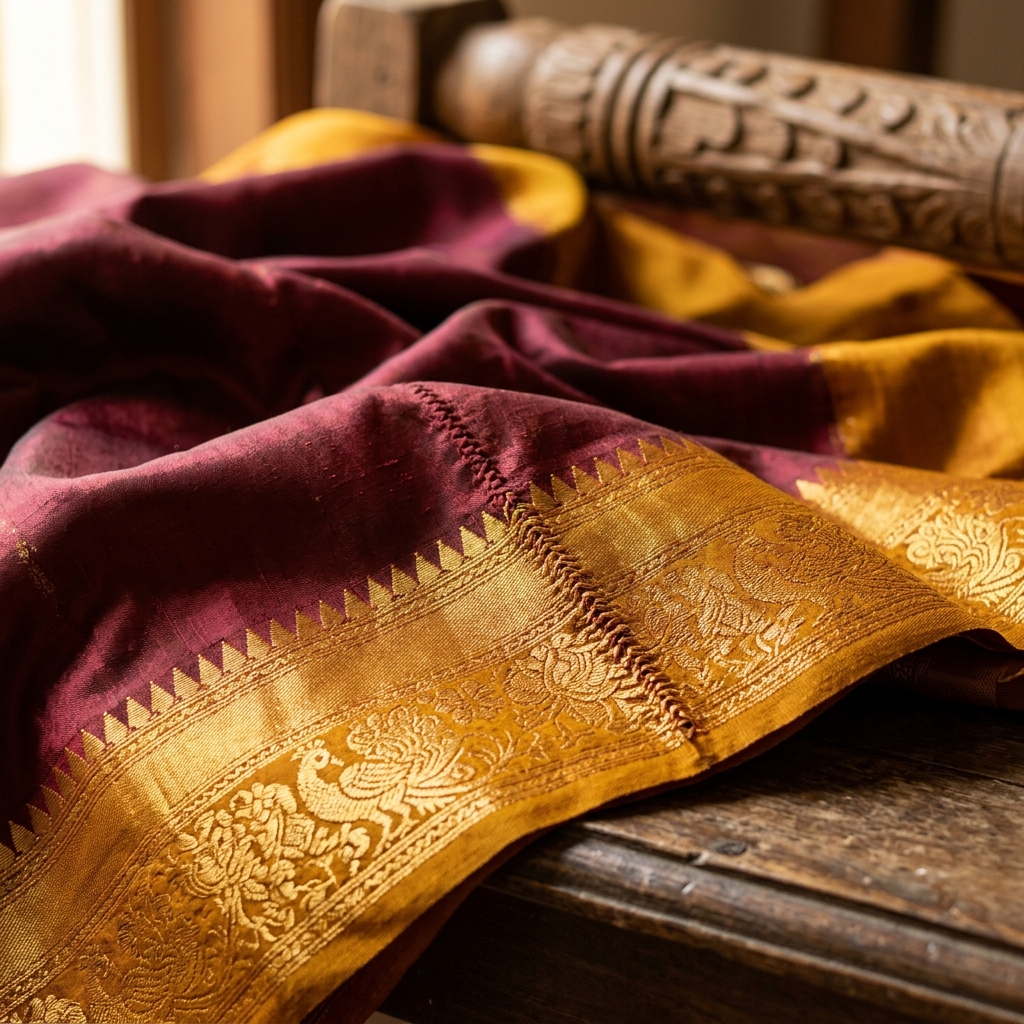
- The zari. This is the biggest swing. Pure zari (real gold or silver thread) is far more expensive than tested/half-fine zari (electroplated), which in turn costs more than synthetic zari. And the amount of zari — a light border versus a heavy all-over brocade or a broad zari pallu — moves the price sharply.
- The weave and technique. Hand-woven costs more than powerloom. Within handloom, intricate techniques — the interlocked korvai border of a Kanchipuram, the kadhua motifs of a Banarasi — take far more skill and time than plain or floated work.
- The labour and time. A heavy bridal saree can take a single weaver weeks, sometimes months, on a handloom. You're paying for that craftsmanship and time, not just material.
Everything below is a variation on these four.
Kanjivaram (Kanchipuram) price factors
A pure Kanjivaram silk saree sits at the premium end for good reasons:
- Pure silk + pure zari is the benchmark — and pure zari versus tested zari is the single biggest price difference between two otherwise similar Kanjivarams.
- The korvai border and pallu — woven separately and interlocked by hand — add labour that powerloom copies simply skip.
- Zari density — a broad, heavily-worked zari pallu and border cost more than a simple contrast border.
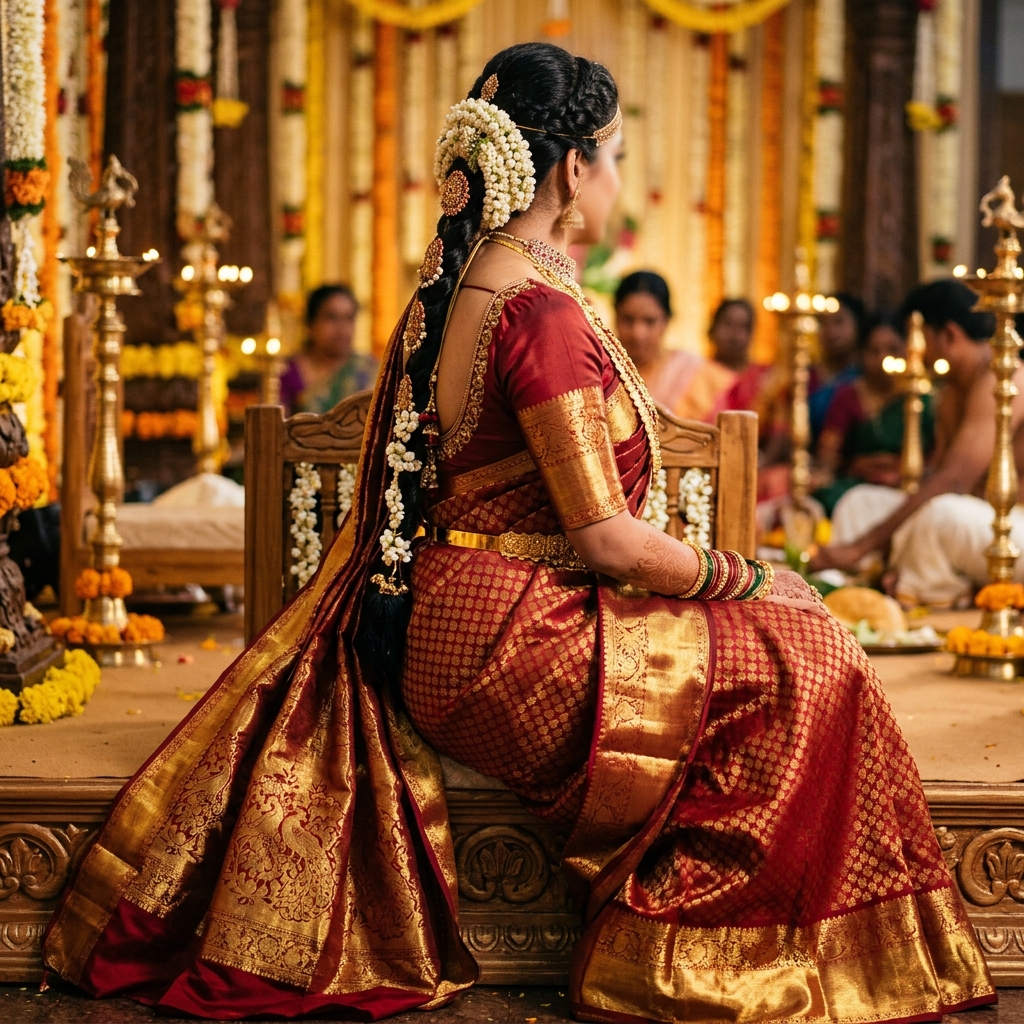
- Weight — heavier bridal Kanjivarams use more silk and zari. Our bridal silk saree edit sits at this end.
Banarasi price factors
For a Banarasi silk saree, price tracks:
- The base silk — pure Katan silk costs more than Georgette, Organza or Shattir.
- Kadhua vs. cutwork — kadhua (each motif woven separately) is slower and dearer than floated cutwork.
- Zari type and coverage — real zari and dense all-over brocade sit well above a light-bordered piece.
This is why two "Banarasi" sarees can be worlds apart in price: a light Georgette with tested zari versus a pure Katan with real-zari kadhua are different products entirely. If you're weighing the two great silk traditions against each other, our guide to Kanjivaram vs Banarasi covers the differences in full.
Soft silk — why it's often lighter on the pocket
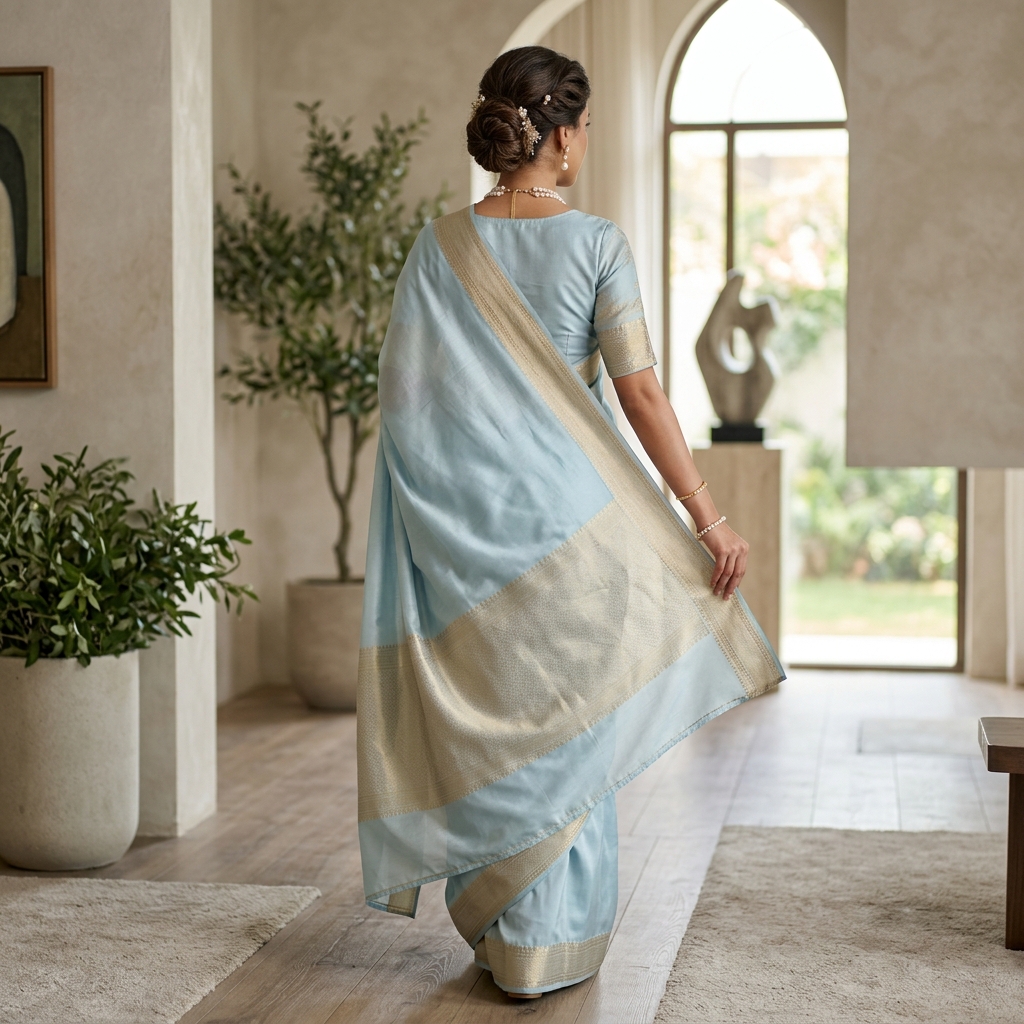
A soft silk saree is pure silk, but its finer, lighter weave and typically lower zari density mean it often costs less than a heavy traditional Kanchipuram. That's not a compromise on material — it's a different weave built for versatility. For everyday-to-occasion wear, soft silk gives you genuine silk elegance at a gentler price point. For a wedding-specific breakdown, see our guide to soft silk Kanchipuram sarees for weddings, with price.
How to be sure you're paying for the real thing
Before you pay premium money, verify you're getting premium quality:
- Ask for the Silk Mark. It certifies pure silk. No Silk Mark, ask why.
- Check the zari honestly. Is it pure, tested, or synthetic? A trustworthy seller will tell you plainly — it's the main thing you're paying for.
- Feel the weave. Pure silk has a warm sheen and substantial fall; the korvai interlock (Kanchipuram) or clean kadhua back (Banarasi) are signs of genuine handloom work. Our 9 foolproof ways to spot a pure Kanjivaram walks through every check.
- Be wary of prices that seem too good. A "pure silk pure zari Kanjivaram" at a fraction of the going rate usually isn't one.
The honest test of a good silk house isn't the lowest price — it's whether they'll show you exactly what you're paying for.
Aikyatha's ranges — a saree for every budget
At Aikyatha, we stock pure silk sarees across a genuinely wide range, so there's something at every budget. As a current guide:
- Soft silk — from around ₹9,000 to ₹15,000; the most accessible way into pure silk.
- Banarasi — from around ₹9,500 to ₹36,000, with most sitting between ₹12,000 and ₹25,000.
- Kanchipuram (Kanjivaram) — from around ₹17,000 to ₹1,70,000, with most between ₹19,000 and ₹50,000; by far the widest range, from everyday pure silk through heavy bridal weaves up to rare pure-zari heirloom pieces.
Prices move with silk and zari rates, so the most reliable figures are always the live ones on the site — browse the Kanchipuram, Banarasi and soft silk collections, or visit our Jayanagar, Malleshwaram or Marathahalli showroom, where our team will show you the quality behind the price.
Frequently asked questions
Why do Kanjivaram sarees vary so much in price?
Mainly the zari — pure gold/silver zari costs far more than tested or synthetic zari — plus the silk weight, the density of the zari work, and the hand-woven korvai border. Two Kanjivarams that look similar in a photo can be very different in materials.
How do I know a silk saree is worth its price?
Confirm pure silk (Silk Mark), ask whether the zari is pure or tested, and check for genuine handloom signs — the korvai interlock on a Kanchipuram or a clean kadhua back on a Banarasi. A good seller shows you all of this openly.
Is a soft silk saree cheaper than a Kanchipuram?
Often, yes — soft silk is pure silk but lighter, with less zari, so it usually costs less than a heavy traditional Kanchipuram while still giving you real silk elegance.
What's the price range of silk sarees at Aikyatha?
As a current guide: soft silk from around ₹9,000, Banarasi from around ₹9,500, and Kanchipuram from around ₹17,000, rising to about ₹1,70,000 for the heaviest pure-zari heirloom weaves. See live prices on the collections for the latest.



Share Product