

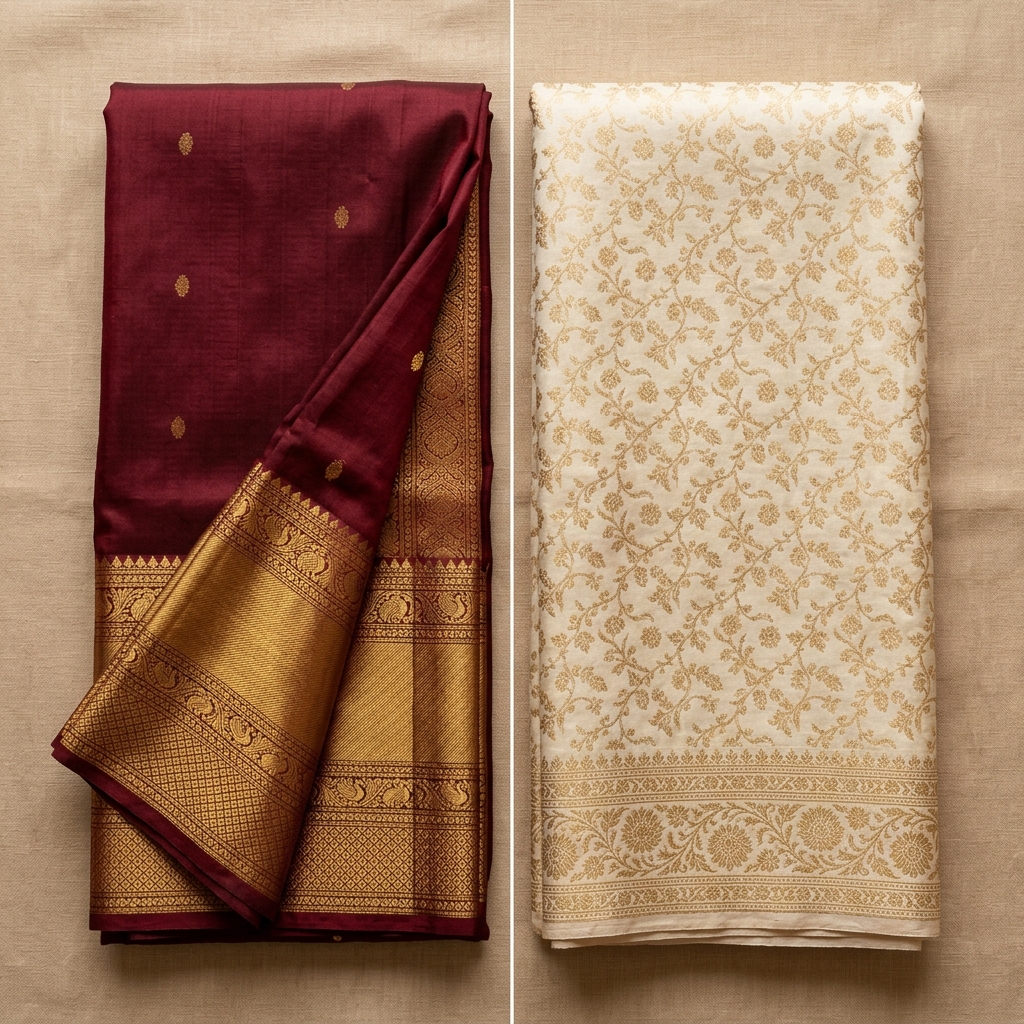
They're the two queens of Indian silk — and the two sarees buyers confuse the most (and, occasionally, get mis-sold). A Kanjivaram and a Banarasi can both cost a small fortune, both dazzle at a wedding, and both claim "pure silk." But they come from different worlds, drape differently, and suit different brides.
Most comparison guides are written by shops that sell only one of them. We're Aikyatha — a Bangalore handloom house that weaves and curates both Kanjivaram and Banarasi silks — so here's the honest Kanjivaram vs Banarasi breakdown, plus a simple way to choose the right one for your wedding.
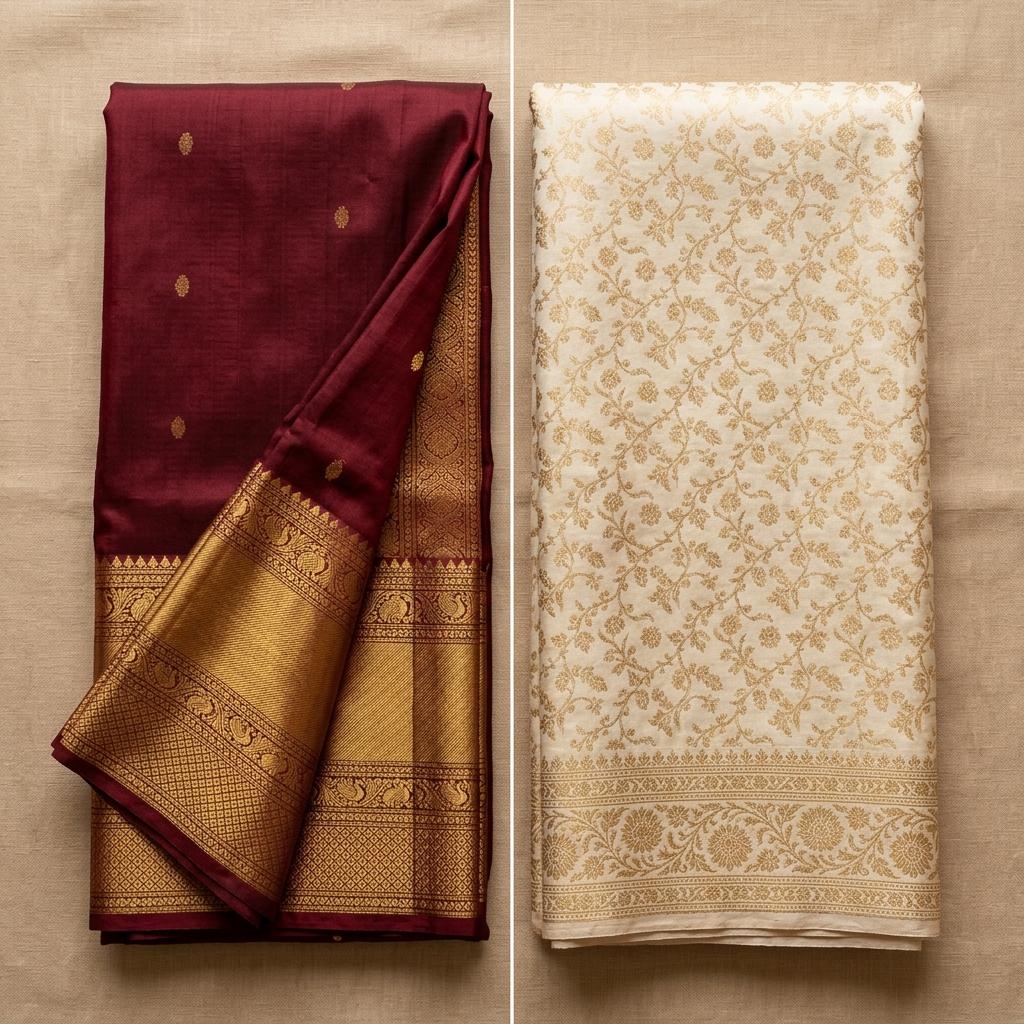
Quick answer: Kanjivaram vs Banarasi at a glance
| Kanjivaram (Kanchipuram) | Banarasi | |
|---|---|---|
| Origin | Kanchipuram, Tamil Nadu (South) | Varanasi, Uttar Pradesh (North) |
| Silk | Heavy pure mulberry silk | Finer, lighter silk |
| Weight | 600–800 g+ | 400–500 g |
| Weave | Korvai — border woven separately, interlocked | Kadwa — motifs woven in, no loose threads |
| Zari & motifs | Temple, checks, peacock, mango — broad contrast border | Mughal florals, jaal, buti — intricate all-over brocade |
| Drape | Crisp, structured, holds shape | Soft, light, easy to drape |
| Best for | South Indian weddings, muhurtham | North Indian weddings, receptions |
| Feel | Regal, solid, heirloom | Opulent, flowing, royal |
Now the detail — the 9 differences that actually matter.
The 9 key differences
1. Origin & heritage
The Kanjivaram is woven in Kanchipuram, Tamil Nadu, a temple town with 400+ years of weaving history, and is GI-protected. The Banarasi comes from Varanasi (Banaras) in the north, with a Mughal-influenced brocade tradition. One is temple-town South; the other is Mughal-court North — and you can see that heritage in every motif.
2. The silk & the weight
Kanjivaram uses thick, three-ply mulberry silk (the raw silk famously sourced from Karnataka), which is why a bridal Kanjivaram weighs 600–800 grams or more. Banarasi silk is finer and lighter, typically 400–500 grams. Pick up both and you'll feel the difference instantly.
3. The weaving technique — korvai vs kadwa
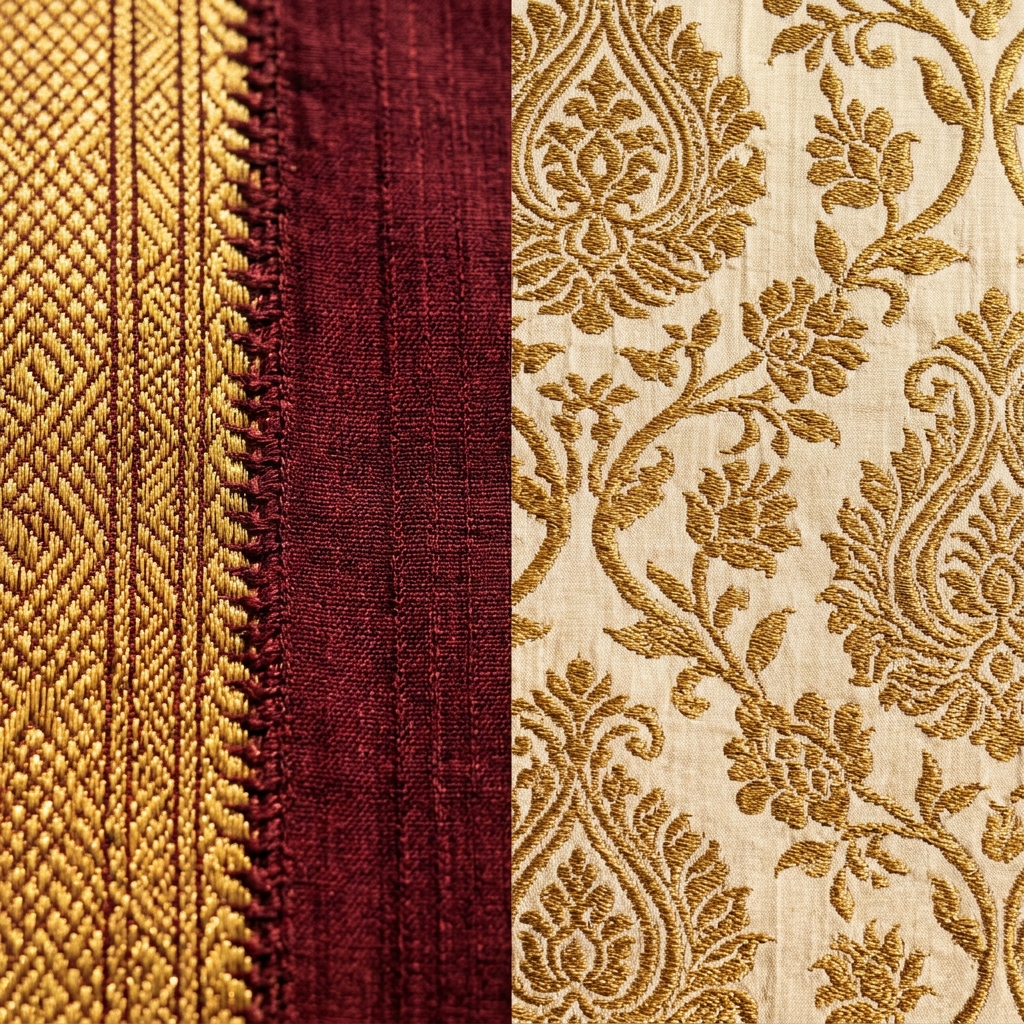
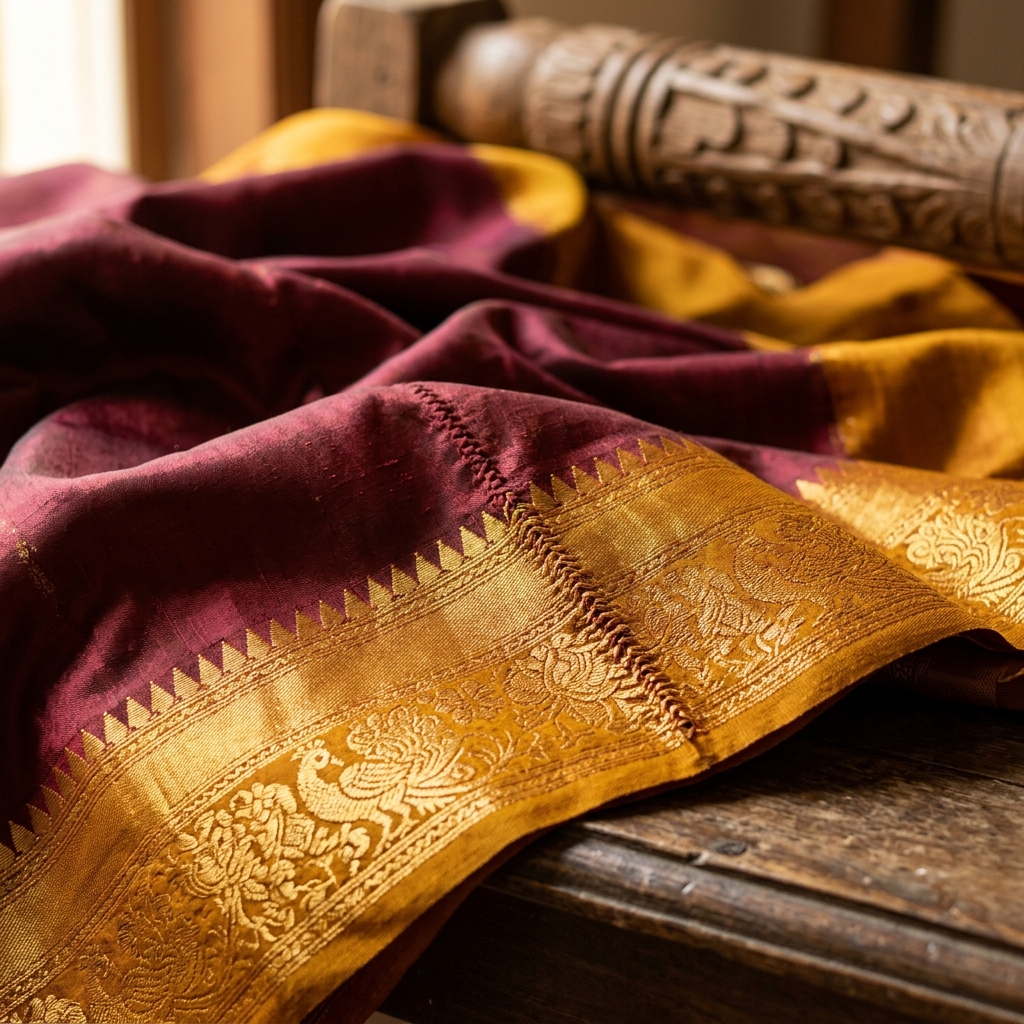
This is the heart of it. In a Kanjivaram, the body and contrast border are woven separately and interlocked by hand — the korvai technique — leaving a distinct ridge on the reverse. In a Banarasi, motifs are woven directly into the fabric using the kadwa technique, with no loose threads hanging at the back. Both are marks of authenticity in their own tradition.
4. Zari & motifs
Kanjivaram zari is bold — temple borders, checks, stripes, peacocks, mangoes and rudraksham motifs, with a broad contrasting border. Banarasi brocade is intricate — Mughal-inspired florals, jaal (net) patterns, butis and kalga — shimmering all over the saree rather than concentrated at the border.
5. The border
A Kanjivaram is defined by its broad, contrasting border — often a completely different colour from the body. A Banarasi border is usually narrower and woven in the same brocade language as the body, for a more continuous, all-over effect.
6. Drape & comfort
Kanjivaram silk is crisp and structured — it holds pleats and shape beautifully, which is why it looks so regal standing at the mandap, but it takes some carrying. Banarasi is soft and flowing, easier to drape and lighter to wear through a long event.
7. Occasion & region
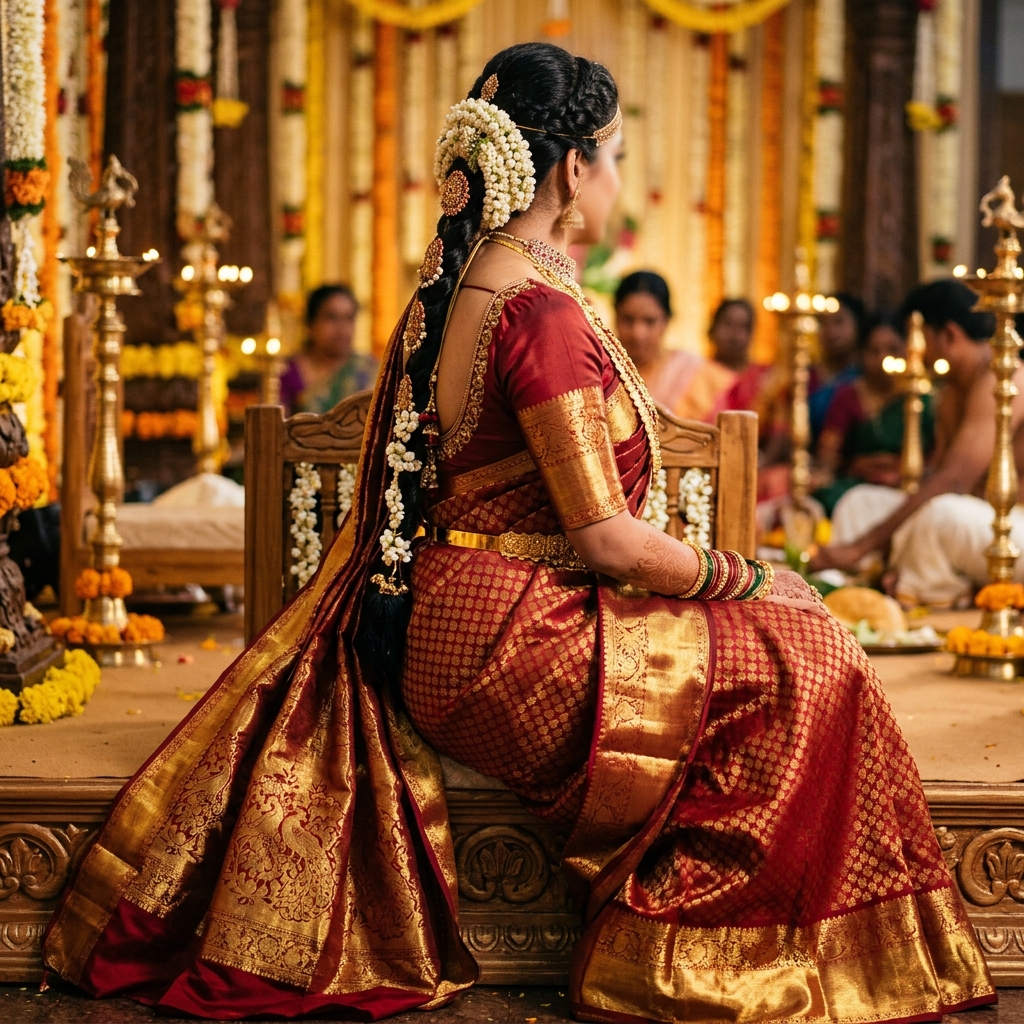
Traditionally, the Kanjivaram is the South Indian bride's saree — the muhurtham, temple ceremonies, Tamil/Telugu/Kannada/Malayali weddings. The Banarasi reigns at North Indian weddings and is a favourite for receptions and grand celebrations across India. Many brides now wear one of each across their functions.
8. Durability
A well-kept Kanjivaram can last 20+ years and become an heirloom passed down generations. Banarasi sarees are more delicate and typically enjoy a shorter graceful life — stunning, but to be handled with more care.
9. Price
Both range widely. Genuine pure Kanjivarams generally start around ₹15,000 and climb past ₹1,00,000 for heavy silk and dense zari. Banarasis span a similarly broad range depending on silk quality and zari. In both cases, a "pure silk" saree priced suspiciously low is almost always a blend — here's how to tell real from fake.
Tell a Kanjivaram from a Banarasi in 10 seconds
Holding a saree and not sure which is which? Three fast checks:
- Flip the border. A Kanjivaram's contrast border is woven separately and interlocked (korvai), leaving a visible ridge on the reverse. A Banarasi's motifs are woven in (kadwa), with a cleaner back and no ridge.
- Feel the weight. The Kanjivaram is noticeably heavier and stiffer; the Banarasi is lighter and more fluid in your hands.
- Read the motifs. Bold temple borders, checks and peacocks point to Kanjivaram; intricate Mughal florals and jaal net-work point to Banarasi.
Still unsure? A genuine seller will happily show you the reverse and talk you through the weave — ask us on a video call.
So… which should you buy?
- For a South Indian muhurtham / temple wedding: a Kanjivaram — the weight, the temple border and the tradition are unbeatable.
- For a North Indian wedding or a grand reception: a Banarasi — the soft drape and brocade shimmer are made for it.
- For all-day comfort (long ceremonies, pregnant brides, older guests): Banarasi, or a lighter soft-silk Kanjivaram.
- On a budget, or buying your first silk saree? A soft-silk Kanjivaram or a lighter Banarasi gives you the look for less — you can always invest in a heavy pure Kanjivaram later.
- Torn? Get one of each. Most brides need a heavier saree for the main ceremony and a lighter one for the reception — a Kanjivaram-and-Banarasi pair covers both beautifully.
There's no wrong answer — only the saree that suits your wedding, your comfort and your heritage. Not sure which flatters you? Book a Virtual Shopping call and we'll show you both, live, or talk to us — we sell both, so we've no reason to push one over the other.
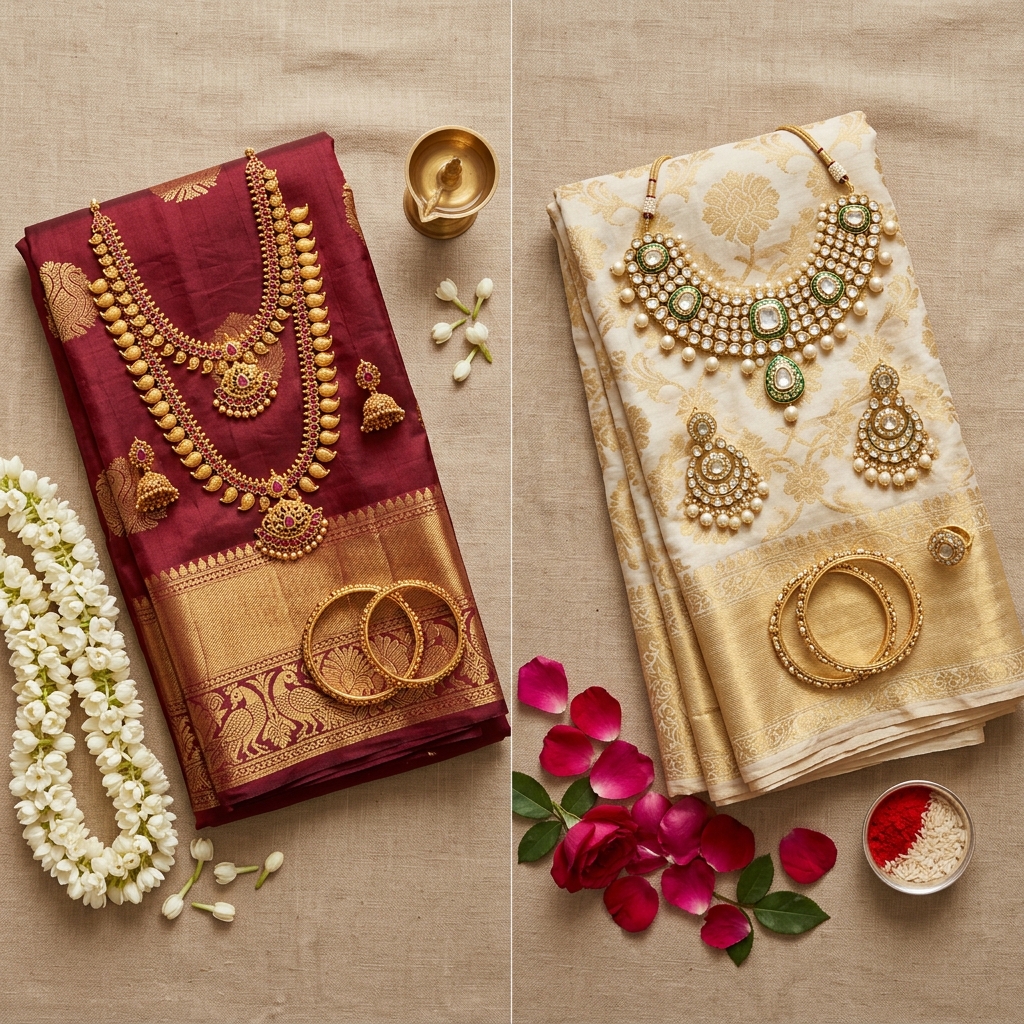
Caring for your Kanjivaram or Banarasi
Both are pure silk and both reward a little care — with one difference.
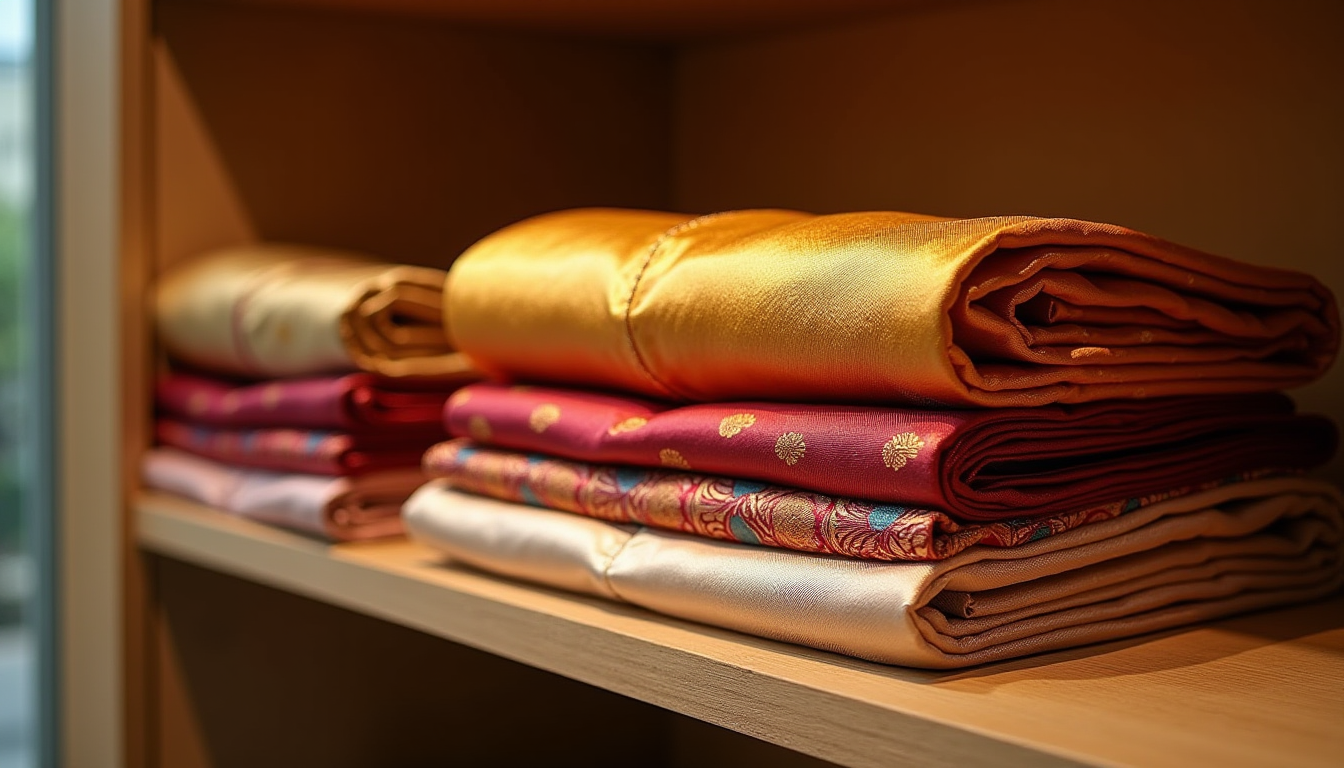
- Storage: wrap each saree in a cotton or muslin cloth (never plastic, which traps moisture and yellows silk) and store in a dry, dark place. A few cloves or neem leaves keep insects away.
- Re-folding: every 2–3 months, re-fold along different lines so the zari doesn't crack along a permanent crease — this matters more for the heavier Kanjivaram, whose thick zari is prone to it.
- Cleaning: dry-clean only, with a silk specialist you trust. Never machine wash or wring either saree.
- Wear: keep perfume and deodorant off the silk, and air the saree after wearing before folding it away.
Treated well, a Kanjivaram becomes a 20-year heirloom; a Banarasi stays gorgeous through years of careful wear.
📌 Frequently asked questions
Is Kanjivaram better than Banarasi? Neither is "better" — they're different. Kanjivaram is heavier, more structured and the classic South Indian bridal choice; Banarasi is lighter, softer and the North Indian favourite. Choose by ceremony, region and comfort.
Which is heavier, Kanjivaram or Banarasi? Kanjivaram — a bridal Kanjivaram weighs 600–800g+, while a Banarasi is typically 400–500g.
Can I wear a Banarasi for a South Indian wedding (or vice versa)? Absolutely. Traditions are guidelines, not rules — many brides mix both across their functions. A Banarasi makes a gorgeous South Indian reception saree.
How do I know either one is pure silk? Look for the Silk Mark certification, real (non-flaking) zari, and the tradition's authenticity marker — korvai for Kanjivaram, kadwa for Banarasi. See our full guide to identifying pure silk.
🔗 Related reads
- 12 Breathtaking Kanjeevaram Bridal Saree Looks for the South Indian Bride
- 9 Foolproof Ways to Spot a Pure Kanjivaram Silk Saree
- Explore our Kanjivaram collection · Explore our Banarasi collection
Aikyatha is a handloom silk saree house in Bangalore, weaving and curating pure Kanjivaram, Banarasi and soft-silk sarees since 2018. Every pure-silk piece is Silk Mark verifiable.



Share Product