

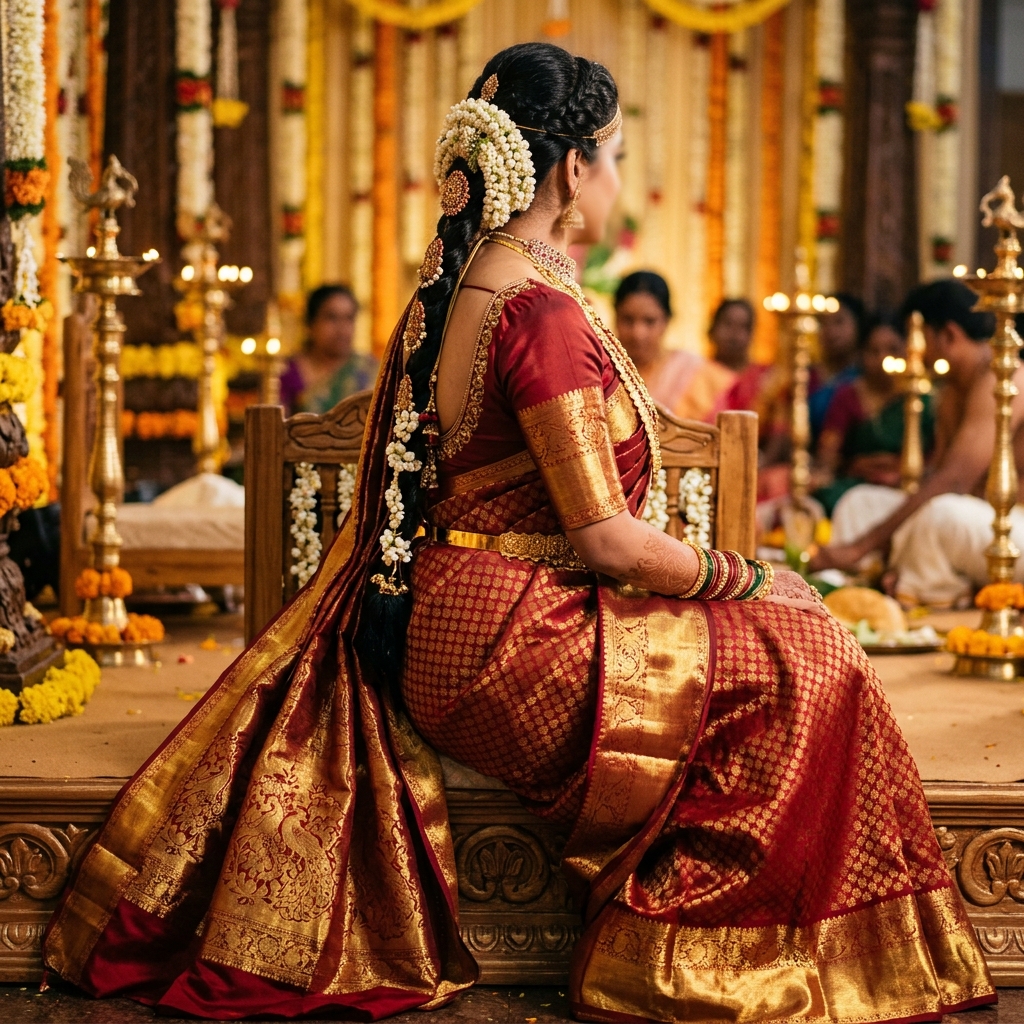
For a South Indian bride, the Kanjeevaram isn't just an outfit — it's the saree. The one in the wedding photos your grandchildren will point at. The one that turns a girl into a bride the moment the silk catches the muhurtham lamps. But between the colours, the borders, the "is this real silk?" worry, and a budget that can run past ₹1,00,000, choosing it can feel overwhelming.
This guide makes it simple. We're Aikyatha — a handloom silk house in Bangalore weaving and curating pure Kanjeevaram sarees since 2018 — and below are 12 Kanjeevaram South Indian bridal saree looks brides are asking us for in 2026, grouped by colour and ceremony. For each one you'll get the honest details: what it's made of, who it flatters, which ceremony it's for, and how to style it. Then the part most guides skip — how to be sure it's authentic, and how brides in Bangalore actually plan and budget for it.
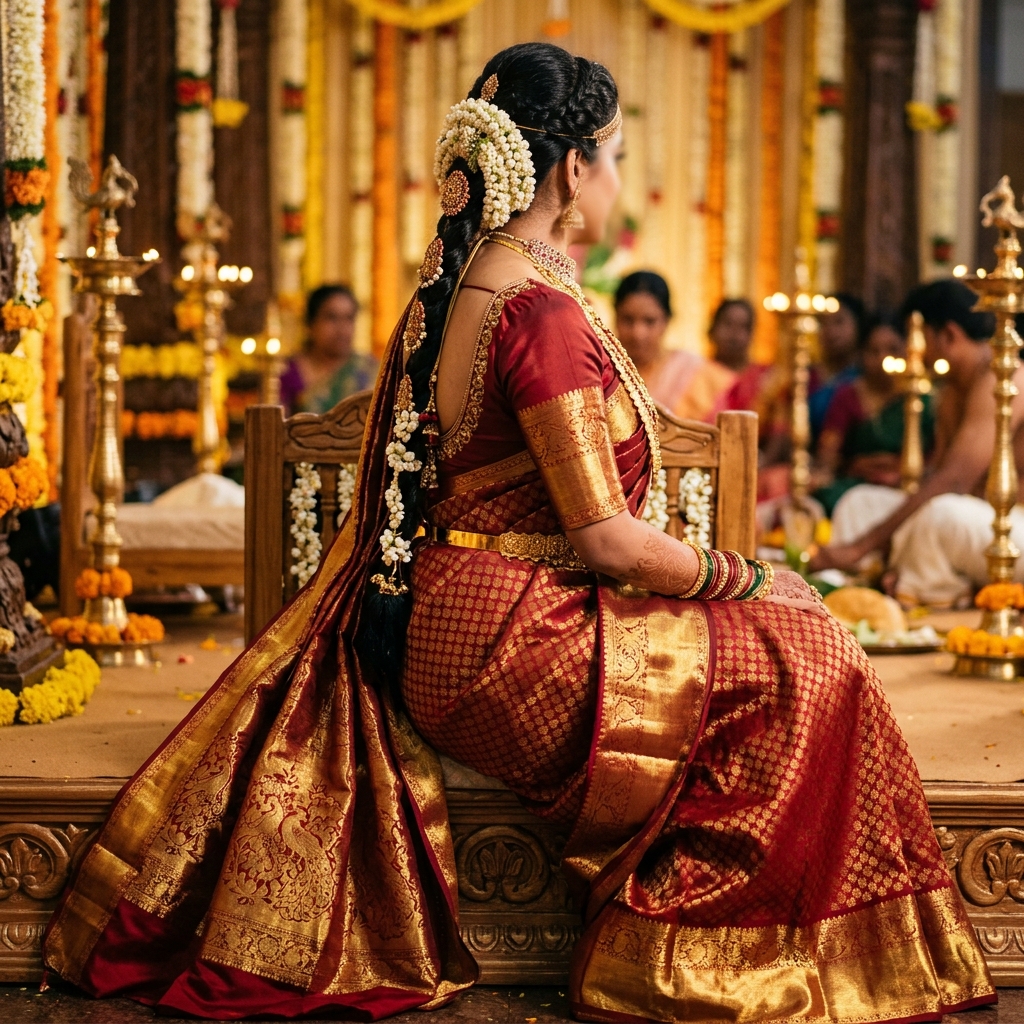
First, why the Kanjeevaram earns its place at every South Indian wedding
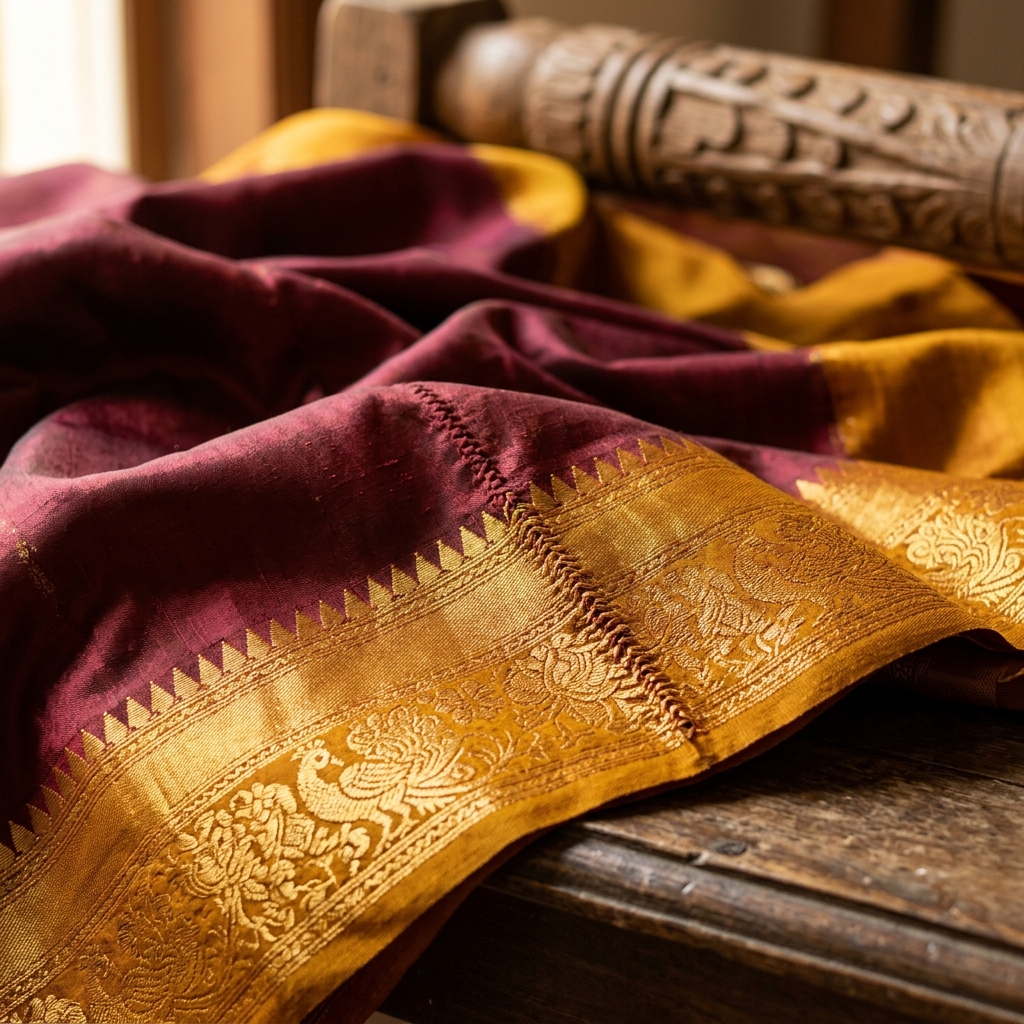
Woven in Kanchipuram, Tamil Nadu, the Kanjeevaram (Kanchipuram) silk saree is a GI-protected craft — pure mulberry silk, real silver-and-gold zari, and the signature korvai technique where the contrast border is woven separately and interlocked with the body by hand. A single bridal saree can take weeks on the loom. That's why it has weight and presence — it holds its pleats, catches light from across the hall, and lasts long enough to become the heirloom your daughter fights her sister for. Now, the looks.
The 12 Kanjeevaram South Indian bridal saree looks
1. Classic Red — the timeless muhurtham saree
Deep, true red is the most-chosen bridal Kanjeevaram for a reason: it symbolises love and the sacred wedding fire, and it photographs beautifully under warm lighting.
- What to look for: a broad contrast zari border (mustard-gold or green), temple or rudraksha motifs, and a heavy pallu.
- Who it suits: every skin tone — red is the one shade that flatters universally. Ideal for the muhurtham / main ceremony.
- Style it with: classic temple gold jewellery, a long haaram, and jasmine in braided hair. If you want one saree that will never look dated, start here.
2. Regal Maroon — understated, universally flattering
A step deeper than red, maroon reads a touch more modern and luxe. It's the safe-but-stunning pick for the bride who finds bright red too loud.
- What to look for: antique-gold zari (rather than bright gold) for a richer, old-money feel.
- Who it suits: wonderful on wheatish and deeper skin tones; perfect for evening ceremonies where the darker tone glows.
- Style it with: kemp (temple ruby) jewellery and a contrast mustard or gold blouse.
3. Auspicious Yellow (Manjal) — tradition with joy
Yellow signifies health and happiness and is the second-most-loved bridal shade in the South.
- What to look for: a sunny or mustard base with a red or green korvai border — the classic Tamil-Brahmin koorai pairing.
- Who it suits: the haldi, the morning ceremony, or a traditional Tamil/Telugu wedding. Especially striking on fair-to-medium skin.
- Style it with: simple gold and fresh flowers — let the colour do the work.
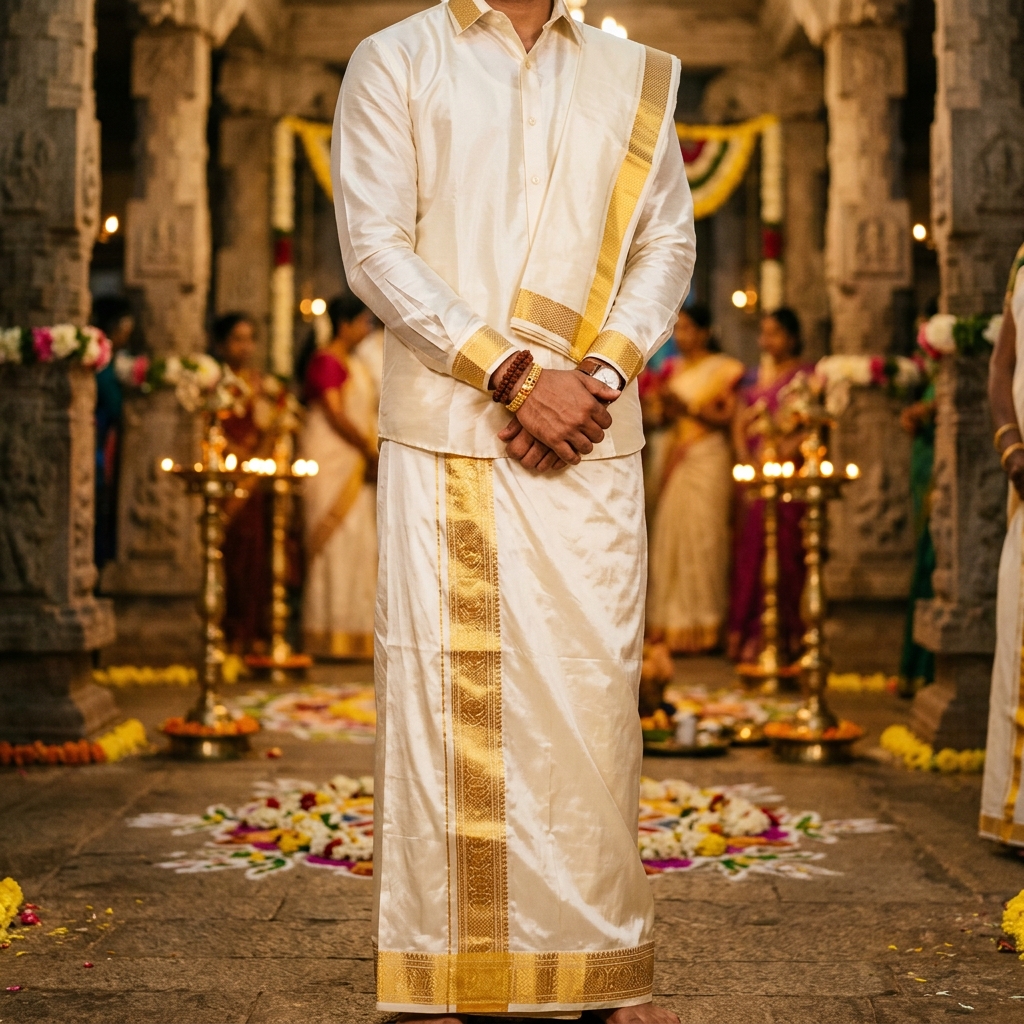
4. Bridal White & Gold — the true South Indian classic
In many South Indian communities (notably Tamil Iyer/Iyengar brides), the bride wears a cream or off-white Kanjeevaram with rich gold zari — pure, luminous, unmistakably regal.
- What to look for: a cream/ivory base (not stark white) with a dense gold border and pallu; korvai is a must here so the gold border reads crisp.
- Who it suits: the traditional muhurtham; photographs like a dream against gold temple jewellery.
- Style it with: maximal temple gold — this look is built for heavy jewellery.
5. Romantic Pastels — the modern reception favourite
Powder blue, mint, blush and champagne Kanjeevarams with delicate gold zari are the runaway trend for 2026 receptions and register weddings — fresh and contemporary while still pure silk.
- What to look for: a soft pastel base with fine (not overpowering) zari, so it stays light and modern.
- Who it suits: the reception, the sangeet, or a minimalist bride. See our full edit in 6 Kanjeevaram pastel colour silk sarees for your big day.
- Style it with: diamond or polki jewellery instead of heavy gold.
6. Baby Pink with a Contrast Blouse — celebrity-inspired
Soft baby pink with a bold contrast blouse (deep green, maroon or navy) is the look brides keep sending us screenshots of. It's romantic, camera-ready, and endlessly stylable.
- What to look for: a baby-pink body that pairs cleanly with a jewel-tone blouse and border.
- Who it suits: receptions and pre-wedding shoots; flatters most skin tones. We broke down five ways to wear it in 5 celebrity-inspired baby-pink Kanjeevaram looks.
- Style it with: a statement contrast blouse and minimal, modern jewellery.
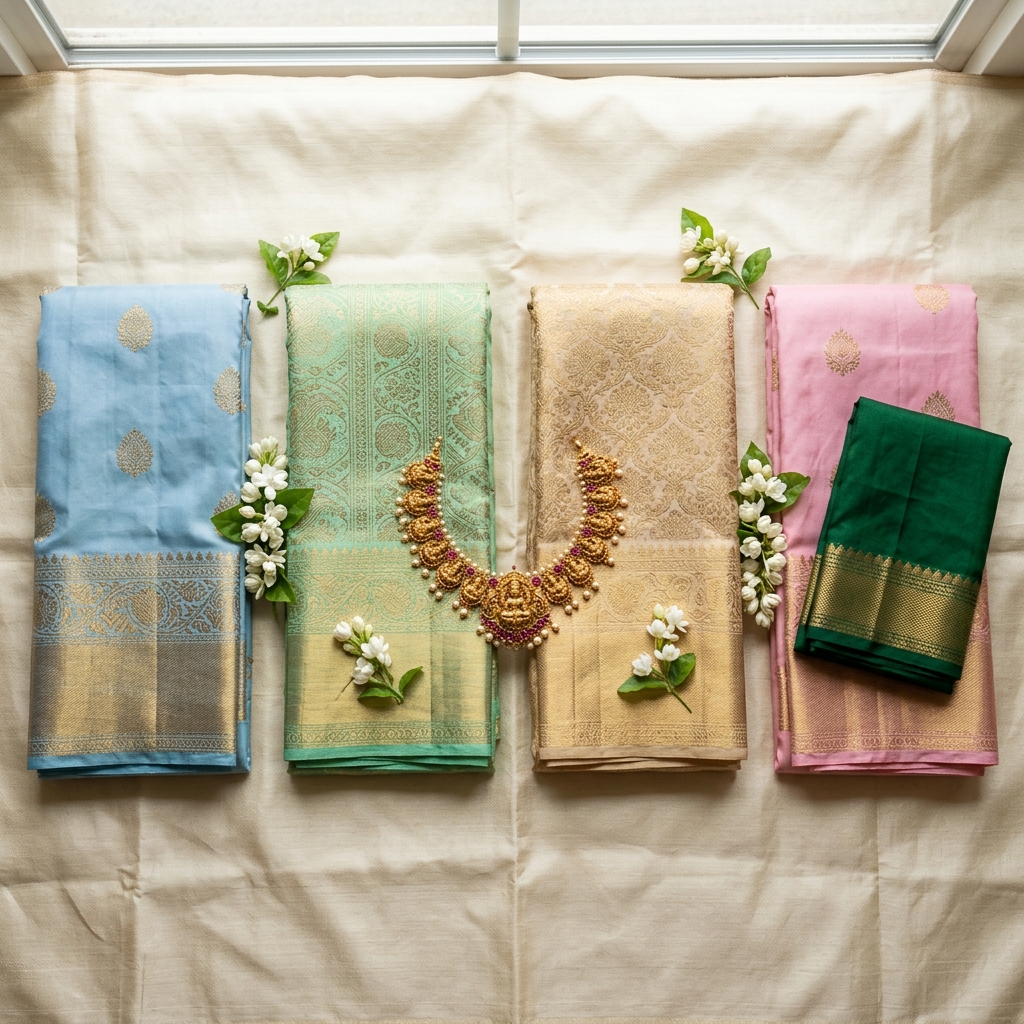
7. Dual-Tone (Contrast Body & Border) — a modern korvai statement
A body in one colour and a border in another — bottle green with gold, magenta with mustard, royal blue with red — is the peak of Kanjeevaram artistry.
- What to look for: a genuine korvai join (the two colours interlocked by hand, not printed) — this is where the craft shows.
- Who it suits: the modern bride who wants something distinctly hers; brilliant for both muhurtham and reception.
- Style it with: pick jewellery to match the border, not the body, for a pulled-together look.
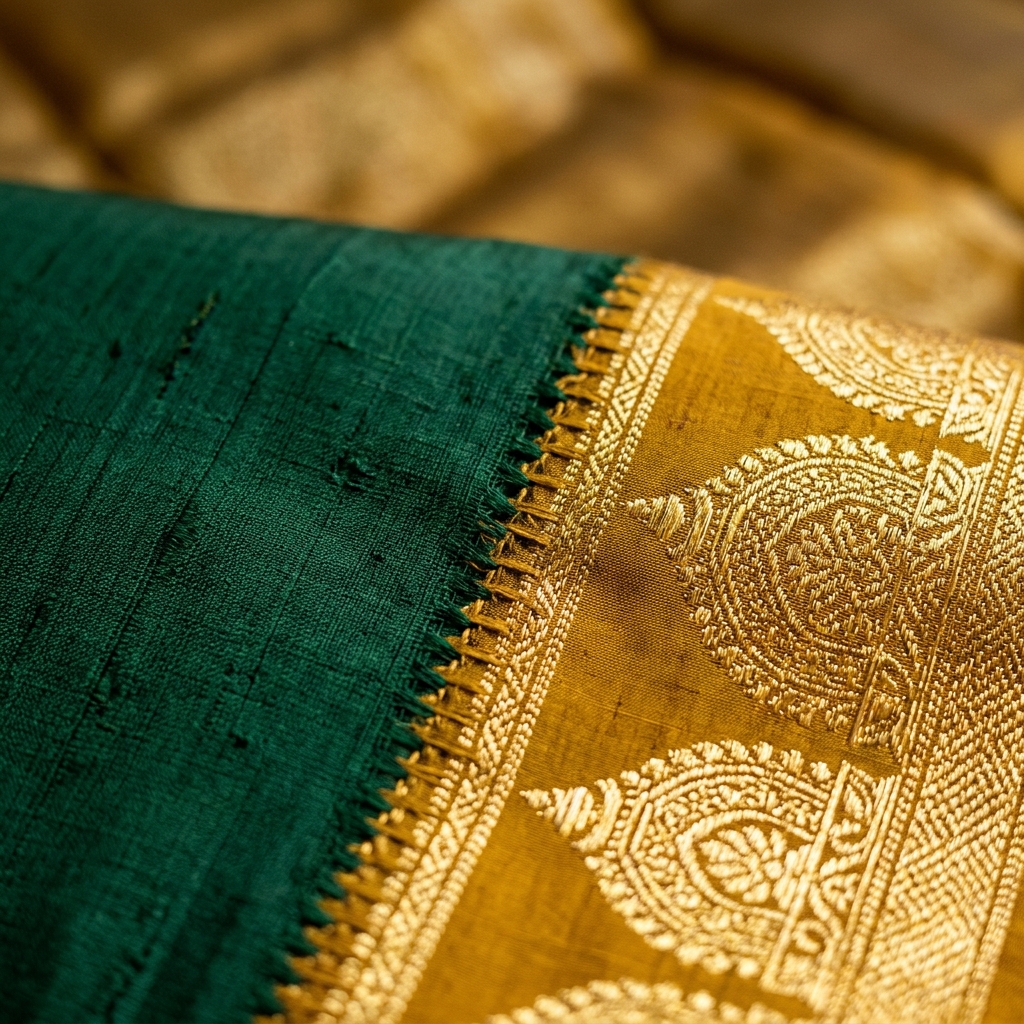
8. Bottle & Emerald Green — the rich alternative to red
Deep green Kanjeevarams feel luxurious and a little unexpected, and they glow against gold.
- What to look for: a saturated bottle or emerald base with a contrasting red or gold border.
- Who it suits: a favourite for the reception or the second-day ceremony; especially rich on warm and deeper skin tones.
- Style it with: uncut-diamond or gold-and-emerald jewellery.
9. Royal Blue & Purple — bold and photogenic
Jewel tones like royal blue and regal purple flatter cool skin undertones and read beautifully on camera.
- What to look for: a deep, even dye and a strong contrast border so the colour doesn't go flat in photos.
- Who it suits: the bride who wants drama without leaving tradition behind. Purple, in particular, is having a real moment in 2026.
- Style it with: silver-toned polki or diamond jewellery to keep it regal.
10. Gold Tissue Kanjeevaram — pure reception glam
A tissue-silk Kanjeevaram woven with heavy gold zari is lightweight shimmer built for the reception spotlight.
- What to look for: real zari tissue (not metallic-coated polyester) — it should feel like silk, not crinkle like foil.
- Who it suits: the reception; glamorous and lighter to carry through a long evening.
- Style it with: go easy on jewellery — the saree already shimmers.
11. Temple-Border Classic — heritage on the pallu
Borders inspired by South Indian temple gopurams — bold, geometric, deeply symbolic — are the detail that makes a Kanjeevaram feel ancestral.
- What to look for: a clearly defined temple (gopuram) border and a pallu that echoes the motif.
- Who it suits: any bride wanting maximum tradition; pair a temple border with any colour above for instant gravitas.
- Style it with: matching temple-motif jewellery for a head-to-toe heritage look.
12. Lightweight Soft-Silk Kanjeevaram — comfort for long ceremonies
Not every bride wants an 800-gram saree for a six-hour ceremony.
- What to look for: a soft-silk Kanjeevaram keeps the pure-silk sheen and zari while draping lighter and softer.
- Who it suits: the engagement (nichayathartham), reception, or a comfort-first bride — and it's easier to re-wear after the wedding.
- Style it with: anything — its versatility is the point.
Before you fall in love: make sure it's authentic
At bridal budgets, authenticity matters most. Three quick checks:
- Silk Mark: look for the Silk Mark hologram tag — India's official pure-silk guarantee, with a QR code you can verify.
- GI standard: a genuine Kanchipuram meets the GI benchmark — real zari (around 57% silver, 0.6% gold), pure mulberry silk, woven in the Kanchipuram region.
- Korvai join: inspect where the border meets the body — on a real korvai saree it's interlocked and firm, never printed or glued.
We've written the full buyer's checklist here: 9 Foolproof Ways to Spot a Pure Kanjivaram Silk Saree — read it before you pay.
A quick note if you're comparing regions: a Kanjeevaram is the heavier South Indian mulberry-silk saree above; a Banarasi is the lighter North Indian brocade. Both are stunning bridal choices — they're simply different traditions.
How Bangalore brides actually plan for it
Buying a bridal Kanjeevaram is a project, not an afternoon. What we tell every bride who walks in:
- Start 4–6 months ahead. That leaves time for selection, blouse stitching, and pre-wedding photos without panic. A good bridal blouse alone can take 3–4 weeks.
- Budget honestly. Genuine bridal Kanjeevarams typically run ₹15,000 to ₹1,00,000+ depending on silk weight and zari density. Our Monthly Saree Scheme lets you build toward your dream saree in comfortable instalments instead of one big outlay.
- Buy two if you can. Most South Indian brides need a heavier saree for the muhurtham and a lighter one for the reception — plan for both from the start.
- Can't visit in person? Our Virtual Shopping sessions let you see the silk catch the light over a video call and ask us anything, live — the same trust as walking into the store.
- Still deciding on the overall look? Our companion guide How to Choose the Perfect Bridal Saree in Bangalore walks through skin tone, ceremony and body type.
Whichever of the 12 speaks to you, the goal is the same: a saree that feels like you on the day everyone is looking. Browse our bridal Kanjeevaram collection or talk to us — no pressure, just honest help.
📌 Frequently asked questions
Which colour Kanjeevaram is best for a South Indian bride? Classic red and maroon are the timeless muhurtham choices and suit every skin tone. White-and-gold is the traditional pick in many South Indian communities, while pastels and dual-tones are the modern reception favourites. Match warm undertones with red/gold, cool undertones with blue/green/purple.
How much does a bridal Kanjeevaram saree cost? Genuine pure Kanjeevarams generally start around ₹15,000 and rise past ₹1,00,000 for heavy silk and dense zari. Anything claiming "pure Kanchipuram" under ₹5,000 is almost always art silk or a blend.
When should I buy my bridal Kanjeevaram? Around 4–6 months before the wedding, so there's time for blouse stitching, fittings and photos.
Do I need separate sarees for the muhurtham and reception? Most brides prefer to. A heavier temple-border Kanjeevaram suits the muhurtham, while a lighter pastel, tissue or soft-silk Kanjeevaram is easier to carry through a long reception evening.
How do I know my bridal Kanjeevaram is pure silk? Check for the Silk Mark certification, the Kanchipuram GI standard, real (non-flaking) zari, and the korvai border join. See our full guide to identifying a pure Kanjivaram.
🔗 Related reads
- 6 Kanjeevaram Pastel Colour Silk Sarees for Your Big Day
- 5 Celebrity-Inspired Baby-Pink Kanjeevaram Looks
- How to Choose the Perfect Bridal Saree in Bangalore
- 9 Foolproof Ways to Spot a Pure Kanjivaram Silk Saree
Aikyatha is a handloom silk saree house in Bangalore, weaving and curating pure Kanjeevaram, Banarasi and soft-silk sarees since 2018. Every pure-silk piece is Silk Mark verifiable.



Share Product