

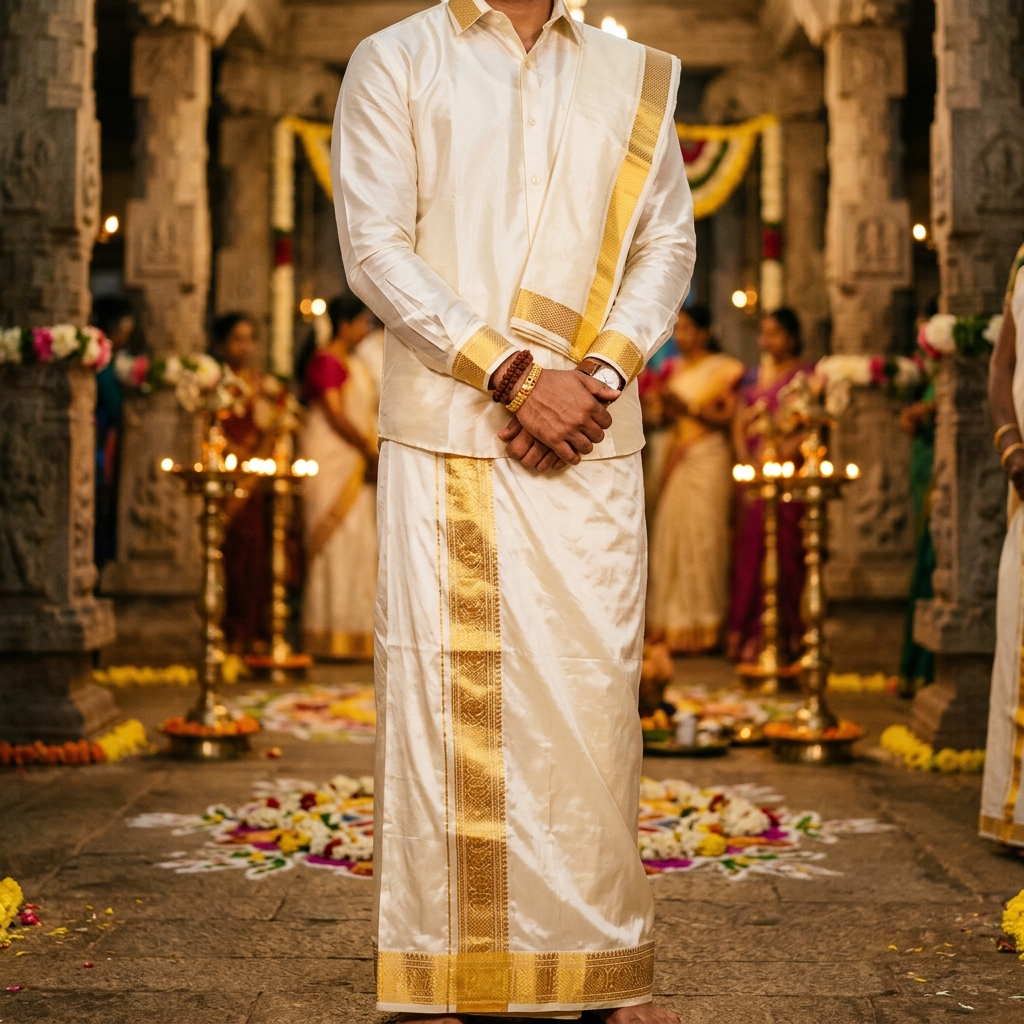
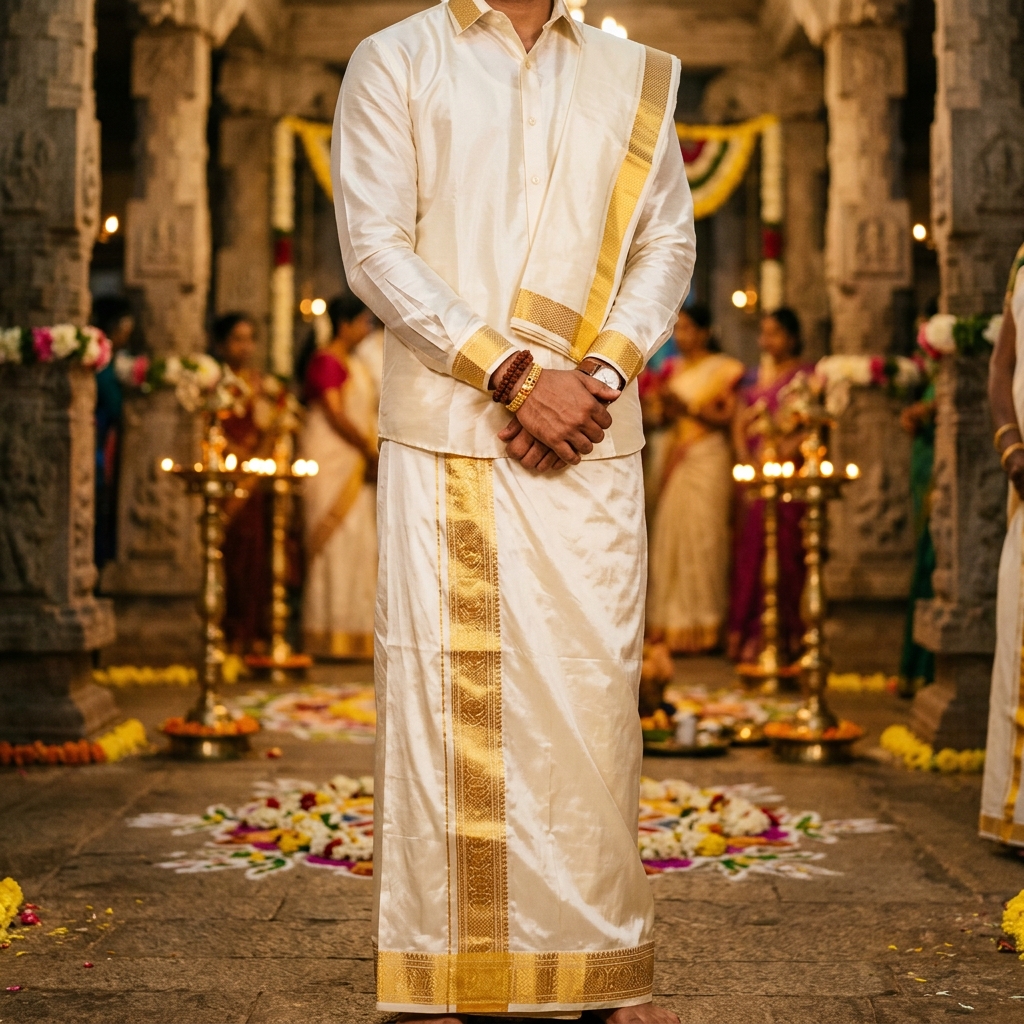
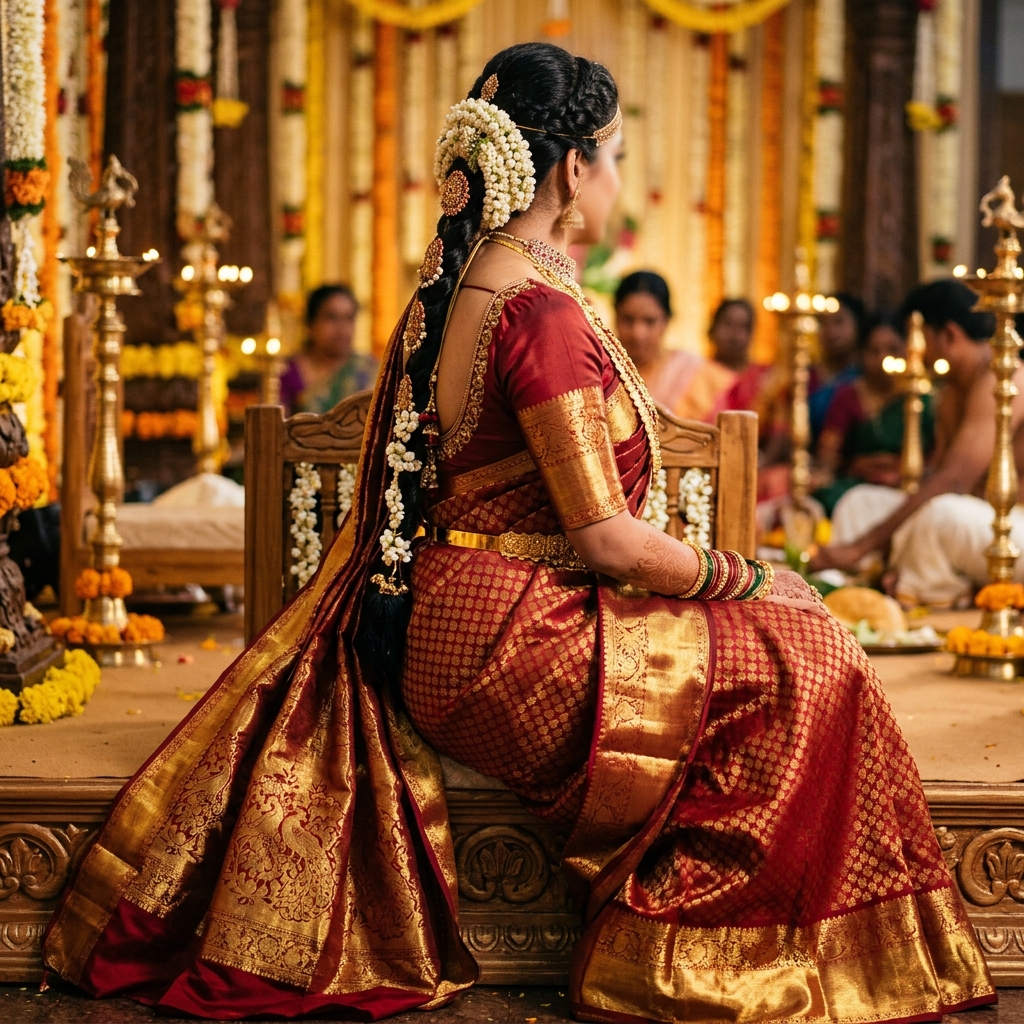
The bride's Kanjeevaram gets all the attention — but stand a South Indian groom next to her in a crisp gold-bordered pure silk dhoti (veshti), and the picture is suddenly complete. The veshti isn't just menswear; it's a mark of respect, tradition, and quiet grandeur, and it will feature in every wedding photo you keep for life.
If you're a groom (or shopping for one) and don't know a pancha kacham from an angavastram, this guide is for you. We're Aikyatha — a Bangalore handloom silk house weaving pure Kanchipuram silks since 2018 — and here are the 7 pure silk dhoti looks grooms are choosing in 2026, what each one is for, and exactly how to wear it. (Already know your style and just need help picking the silk? Read our companion guide, How to Choose the Perfect Pure Silk Dhoti for Weddings & Rituals.)
First, why pure silk (and not the polyester lookalike)
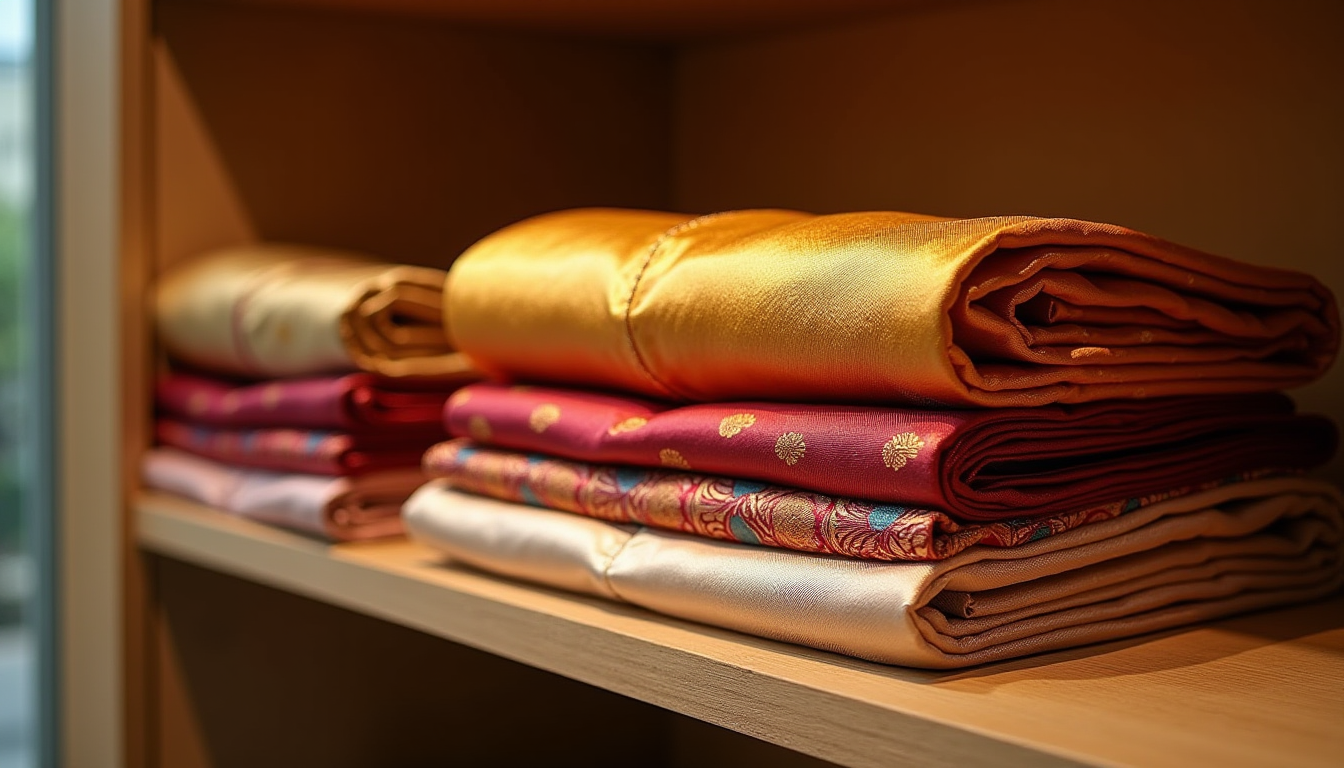
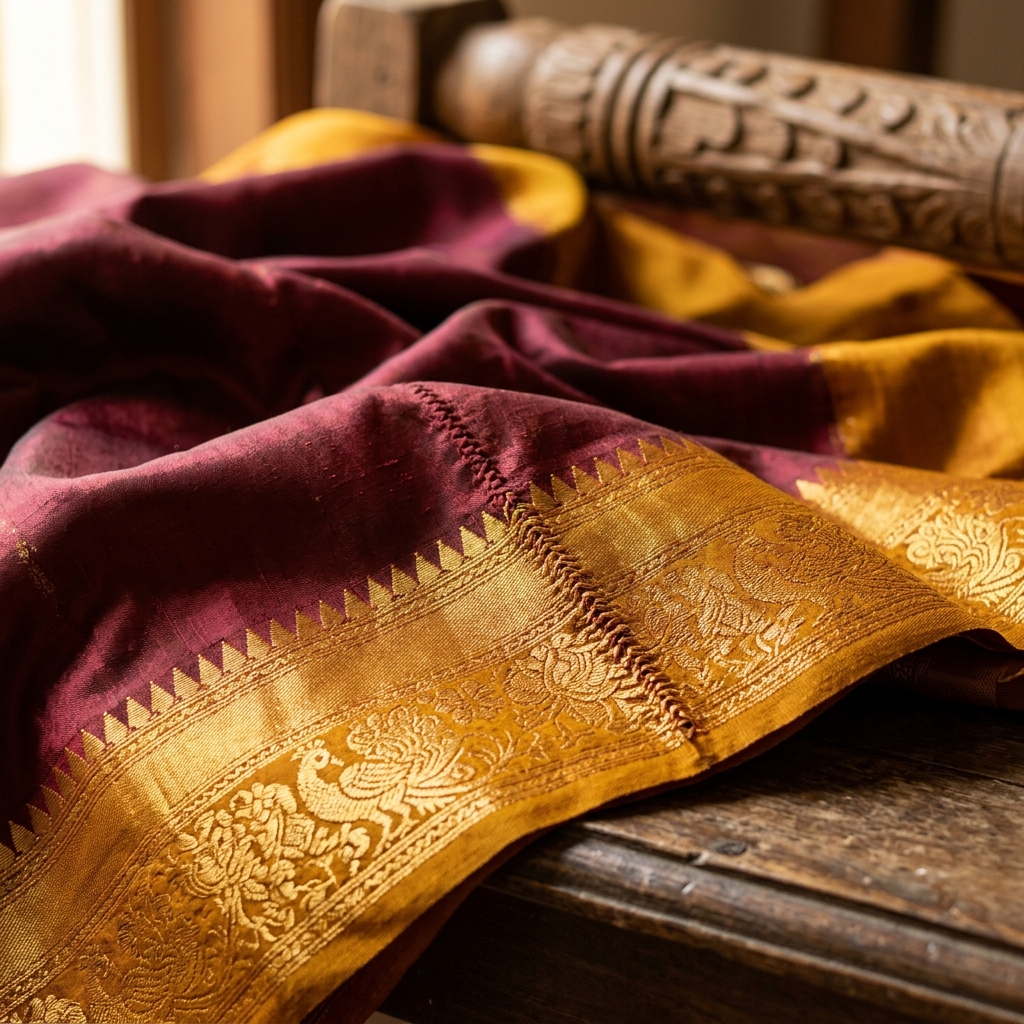
A genuine Kanchipuram silk dhoti is woven from pure mulberry silk with a real silver-and-gold zari border — the same craft as the bridal saree. It drapes with weight, holds its pleats through a long ceremony, and photographs with a soft natural sheen that polyester simply can't fake. At a wedding, that difference is visible from across the mandap. Look for the Silk Mark tag to be sure you're getting pure silk, then pick your look.
The giveaways of a fake are easy once you know them: a plasticky, over-bright shine; a border that feels printed or glued on rather than woven in; a suspiciously light weight; and zari that flakes when you scratch it. A real veshti feels substantial, its zari is a warm matte-gold, and the border is woven into the body of the cloth. If a "pure silk" dhoti is priced like a cotton one, it simply isn't pure silk.
The 7 pure silk dhoti looks for grooms
1. The Classic White & Gold Veshti — the timeless muhurtham look
White (or off-white) with a wide gold zari border is the South Indian groom's saree. White signifies purity and new beginnings; the gold border signals prosperity.
- Best for: the muhurtham / main ceremony.
- How to wear it: as a full-length veshti with a matching or gold-bordered shirt, plus an angavastram (shoulder cloth) draped over the left shoulder.
2. Cream Tissue Silk — understated reception elegance
A cream or ivory tissue-silk dhoti carries a subtle shimmer that reads richer than plain white without shouting.
- Best for: the reception or engagement.
- How to wear it: with a bandhgala or a silk kurta in a deep jewel tone for contrast.
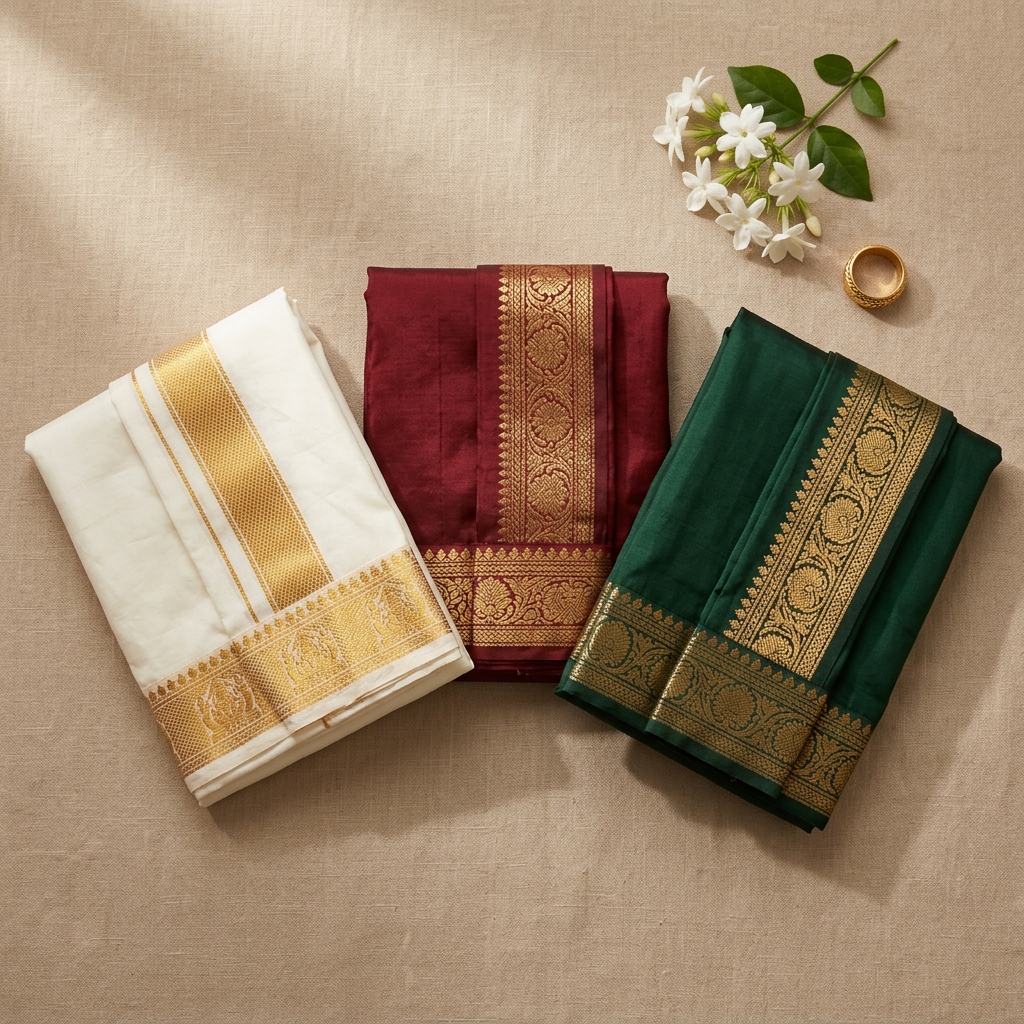
3. Colour Dhoti (Maroon, Mustard, Deep Green) — the modern groom
Grooms in 2026 are moving beyond white. A maroon, mustard or bottle-green silk dhoti with a gold border feels contemporary while staying rooted in tradition.
- Best for: the reception, sangeet, or a second-day function.
- How to wear it: coordinate the dhoti colour with the bride's Kanjeevaram border for a photograph-ready couple look.
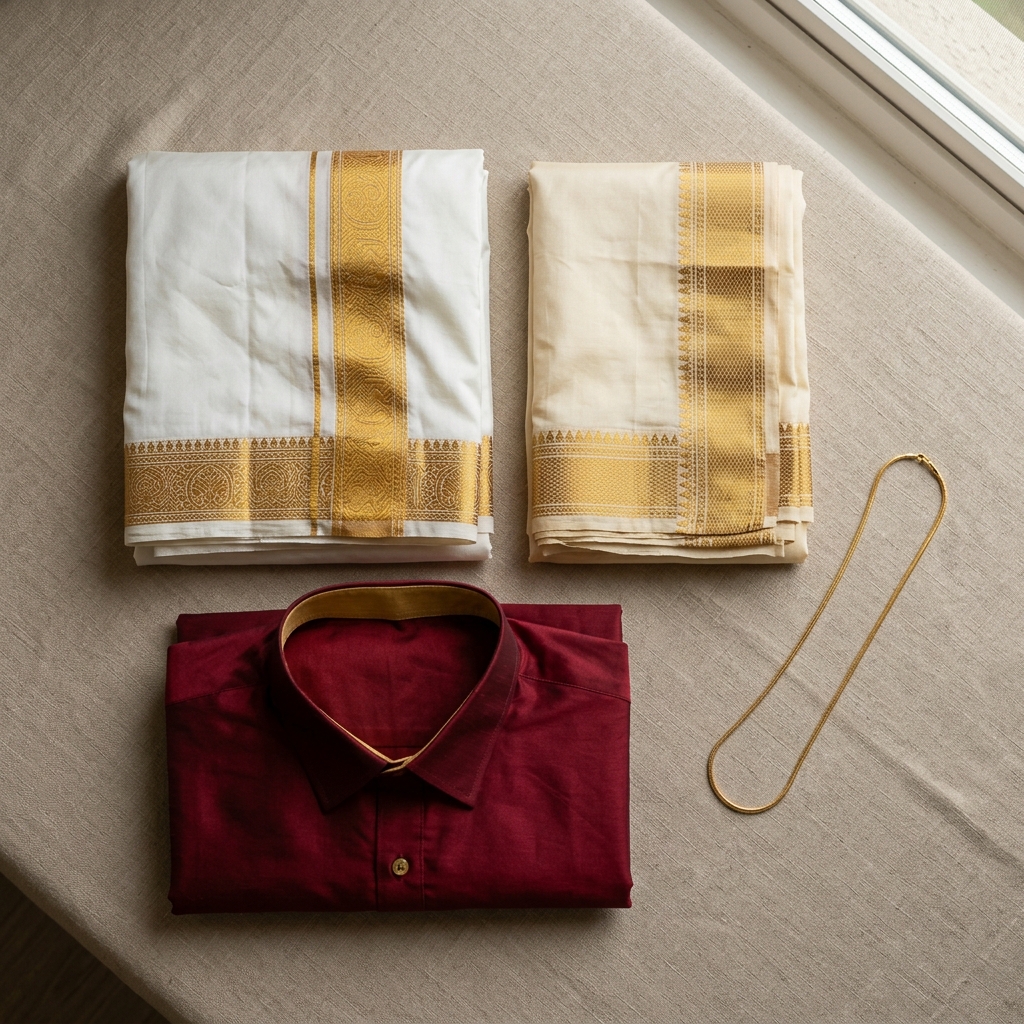
4. The Coordinated Dhoti & Shirt Set — effortless and polished
A pre-matched pure silk dhoti-and-shirt set takes the guesswork out of colour and border matching.
- Best for: grooms who want a complete, foolproof look with zero styling stress.
- How to wear it: add an angavastram in the same border for a coordinated finish.
5. Grand Wide-Border Veshti — for the groom who wants presence
A dhoti with a broad, heavy zari border (2–4 inches) is the menswear equivalent of a bridal border.
- Best for: the main ceremony when you want to hold your own next to a heavily-worked bridal saree.
- How to wear it: keep the shirt simple so the border does the talking.
6. Traditional Pancha Kacham (Panchakacham) — full ritual authenticity
The pancha kacham is the traditional five-yard pleated style, tucked at the back — the most orthodox, ritual-correct drape for temple weddings and Brahmin ceremonies.
- Best for: traditional muhurtham and temple rituals.
- How to wear it: it takes practice — have an elder or the store help you pleat and tuck it correctly on the day.
7. Silk Dhoti with Angavastram & Vaddanam — the complete regal finish
The finishing details make the groom. An angavastram over the shoulder and an optional vaddanam (waist belt) elevate any dhoti to full ceremonial grandeur.
- Best for: any ceremony where you want the complete, head-to-toe traditional look.
- How to wear it: match the angavastram border to the veshti; add temple-motif jewellery or a simple gold chain.
Which dhoti for which ceremony — a quick guide
Not sure which look fits which function? Here's the shortcut:
| Ceremony | Best dhoti look | Border |
|---|---|---|
| Muhurtham / main wedding | Classic white-and-gold or grand wide-border veshti | Broad gold zari (2–4 in) |
| Temple ritual / homam | Pancha kacham (pleated), white or cream | Medium gold |
| Engagement (nichayathartham) | Cream tissue or soft colour dhoti | Fine-to-medium |
| Reception | Colour or tissue dhoti (maroon, green, gold) | Contrast / antique gold |
| Sangeet / mehendi | Lighter colour dhoti with a silk kurta | Slim |
A note on regional draping. The way a veshti is worn changes across the South: Tamil grooms favour the pleated pancha kacham for temple ceremonies; Kerala grooms wear the ivory-and-gold kasavu mundu; Andhra and Telangana grooms often pair a pancha with a silk kurta. Follow the drape your family keeps — and when in doubt, the classic single-fold veshti with an angavastram is welcome at every ceremony.
How to wear a silk dhoti (the quick version)
- Wrap the dhoti around your waist, right end first, and knot securely at the front.
- Gather the loose end into even pleats and tuck at the waist (or, for pancha kacham, pleat and tuck at the back).
- Drape the angavastram over your left shoulder.
- Keep a safety pin and a second dhoti handy — silk can slip, and you'll be on your feet for hours.
Care tip: always dry-clean pure silk dhotis; never machine wash. Store folded with the zari inside, away from damp, and re-fold along different lines occasionally so the creases don't set.
Buying your groom dhoti in Bangalore
- Order 1–2 months ahead so there's time for shirt stitching and a matching angavastram.
- Coordinate with the bride. Bringing the bride's saree colour (or a photo) helps us match borders for that perfect couple photograph — our Virtual Shopping call makes this easy if you can't visit.
- Buy pure, verify pure. Every silk dhoti we sell is Silk Mark verifiable; if you're unsure how to tell real from fake, our guide to spotting pure Kanjivaram silk applies to dhotis too.
Explore our pure silk dhoti collection, or talk to us and we'll help you (and the bride) look unforgettable.
📌 Frequently asked questions
What is the difference between a dhoti and a veshti? They're the same garment — "veshti" is the Tamil term, "dhoti" the pan-Indian one. In South Indian weddings it's worn with an angavastram over the shoulder.
Which colour silk dhoti is best for a groom? Classic white-and-gold is the traditional muhurtham choice. For the reception, cream tissue or a colour dhoti (maroon, mustard, green) coordinated with the bride's saree looks striking.
How much does a pure silk dhoti cost? Genuine pure-silk dhotis with real zari typically start around ₹3,000–₹5,000 and rise with silk weight and border work. Very cheap "silk" dhotis are usually polyester.
How do I care for a silk dhoti? Dry-clean only, store folded with the zari inside, away from moisture, and avoid direct perfume or deodorant contact with the silk.
🔗 Related reads
- How to Choose the Perfect Pure Silk Dhoti for Weddings & Rituals
- 12 Breathtaking Kanjeevaram Bridal Saree Looks for the South Indian Bride
- 9 Foolproof Ways to Spot a Pure Kanjivaram Silk Saree
Aikyatha is a handloom silk house in Bangalore, weaving pure Kanchipuram silk sarees and dhotis since 2018. Every pure-silk piece is Silk Mark verifiable.



Share Product