

Not every occasion calls for an 800-gram bridal Kanjivaram. Sometimes you want the sheen and status of pure silk — but light enough to wear to the office, drape yourself for a temple visit, or carry comfortably through a six-hour reception. That's exactly what soft silk sarees are for.
Soft silk is the most versatile silk in your wardrobe: pure mulberry-silk lustre, a gentler drape, a friendlier price, and a saree you'll actually re-wear. We're Aikyatha — a Bangalore handloom house weaving pure silks since 2018 — and here are 10 soft silk saree looks for every part of your life in 2026, plus what soft silk really is and how to care for it.
First, what exactly is a soft silk saree?
Soft silk is woven from the same pure mulberry silk as a Kanjivaram — but with a finer, lighter weave. The result:
- Lighter: roughly 400–500 grams vs 600–800g+ for a heavy Kanjivaram.
- Softer drape: it falls and pleats easily, so it's comfortable for long hours.
- Gentler price: less raw silk and lighter zari mean it's more affordable — silk luxury without the bridal budget.
- Still pure silk: it keeps the natural sheen; look for the Silk Mark tag to be sure. (New to telling real silk from fake? Our authenticity guide helps.)
Think of it as the everyday-to-festive silk — the one between a cotton and a bridal Kanjivaram. Now, the looks.
Soft silk vs art silk — don't get fooled
Here's the trap: because "soft silk" sounds affordable, some sellers use the name for art silk (polyester or viscose) that only looks similar. The difference matters — one is pure mulberry silk, the other isn't silk at all.
- Sheen: real soft silk has a warm, multi-tonal glow; art silk shines flat, white and plasticky.
- Feel: pure silk is warm to the touch and settles softly; art silk feels cool, slippery and synthetic.
- Price: genuine soft silk costs more than art silk for a reason — a ₹800 "soft silk saree" is almost certainly art silk.
- Proof: ask for the Silk Mark tag. Genuine soft silk can be certified; if the seller dodges the question, you have your answer.
The 10 soft silk saree looks
1. The Office Soft Silk — quiet luxury for work
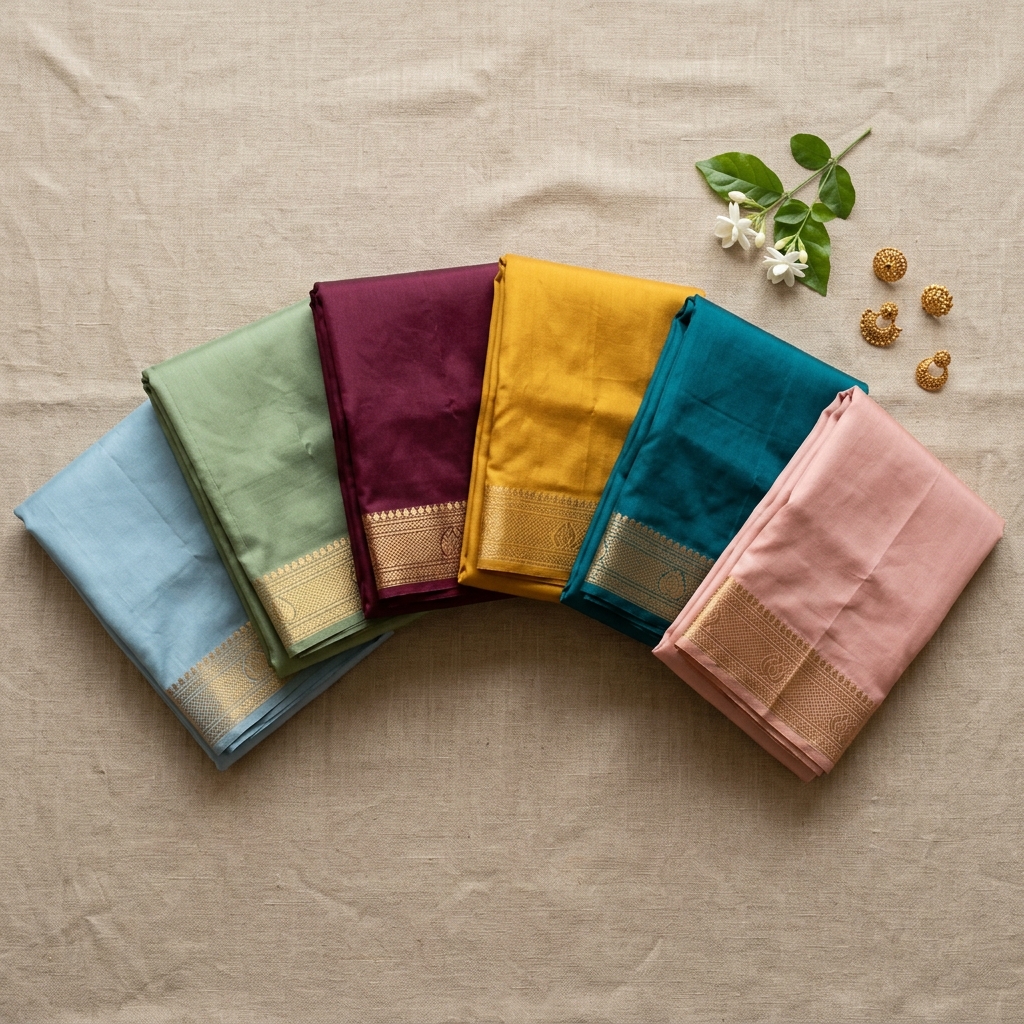
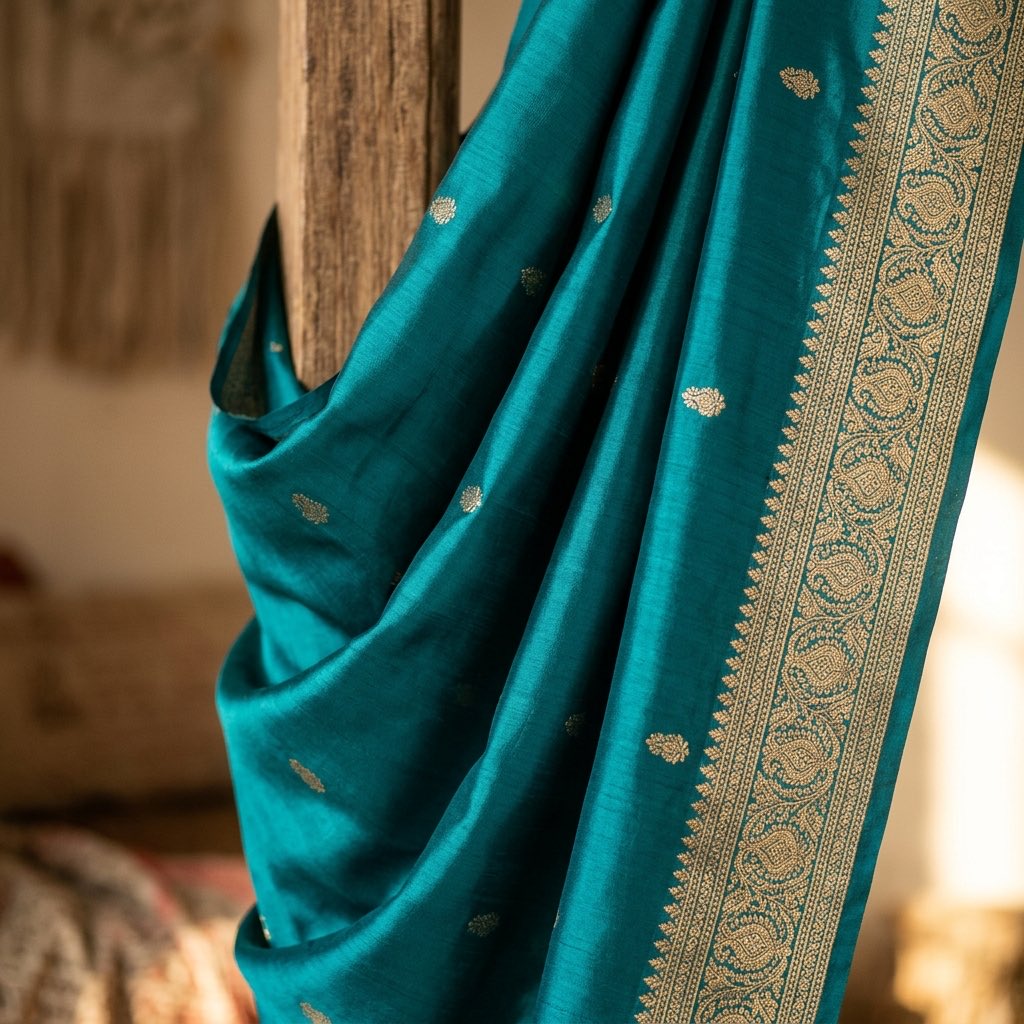
A solid-colour soft silk with a thin zari border reads polished and professional without trying too hard. Deep teal, wine, slate grey, mustard.
- Wear it to: work events, client meetings, an office festival day.
- Style it with: a well-fitted blouse and minimal gold studs.
2. The Temple & Festival Soft Silk — traditional, comfortable
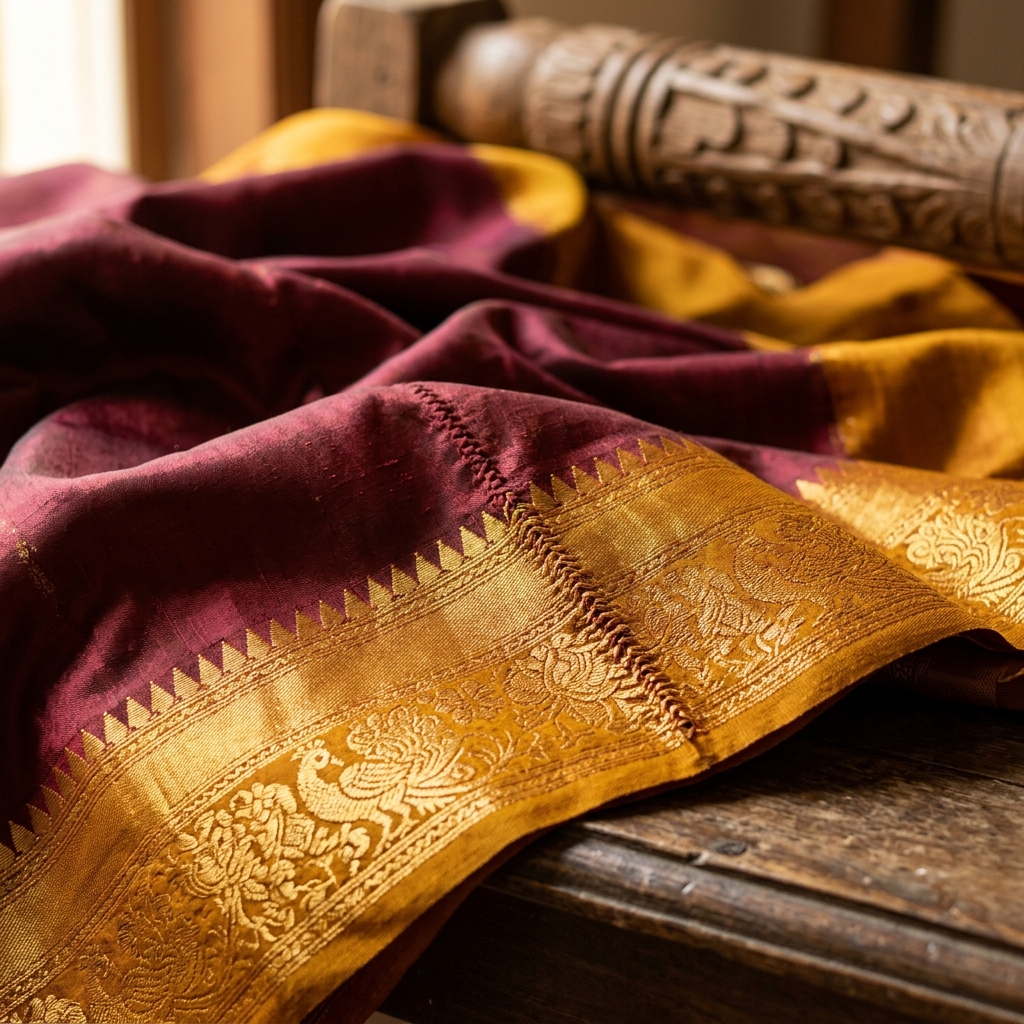
Classic festival colours — mustard, maroon, green — with a gold border and a light pallu. All the tradition, none of the weight.
- Wear it to: temple visits, Varamahalakshmi, Navaratri, Ugadi, Pongal.
- Style it with: temple gold jewellery and fresh flowers.
3. The Kanchipuram Soft Silk — the pattu look, lighter
A soft-silk Kanchipuram gives you the pattu-saree look — temple border, zari pallu — in a saree you can actually sit, eat and dance in.
- Wear it to: functions, engagements, family weddings.
- Style it with: a contrast blouse and a long haaram.
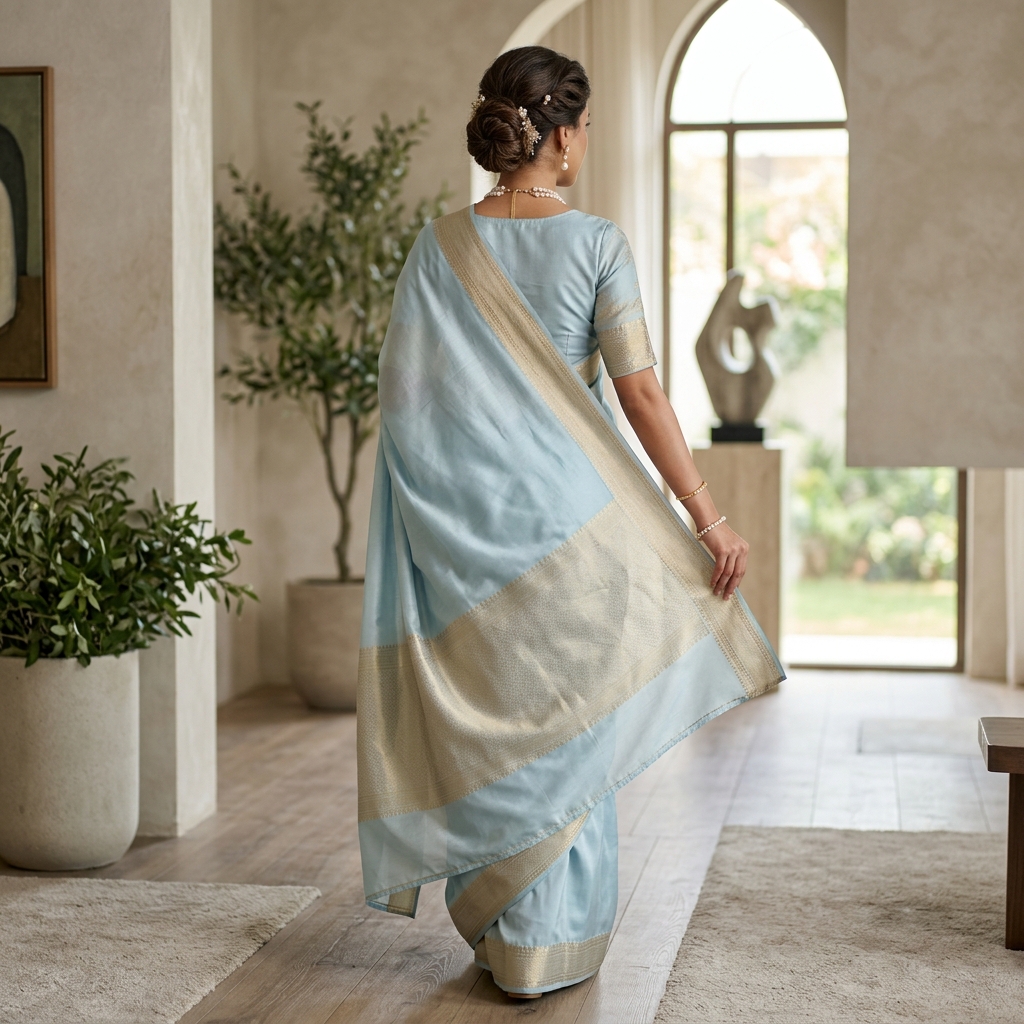
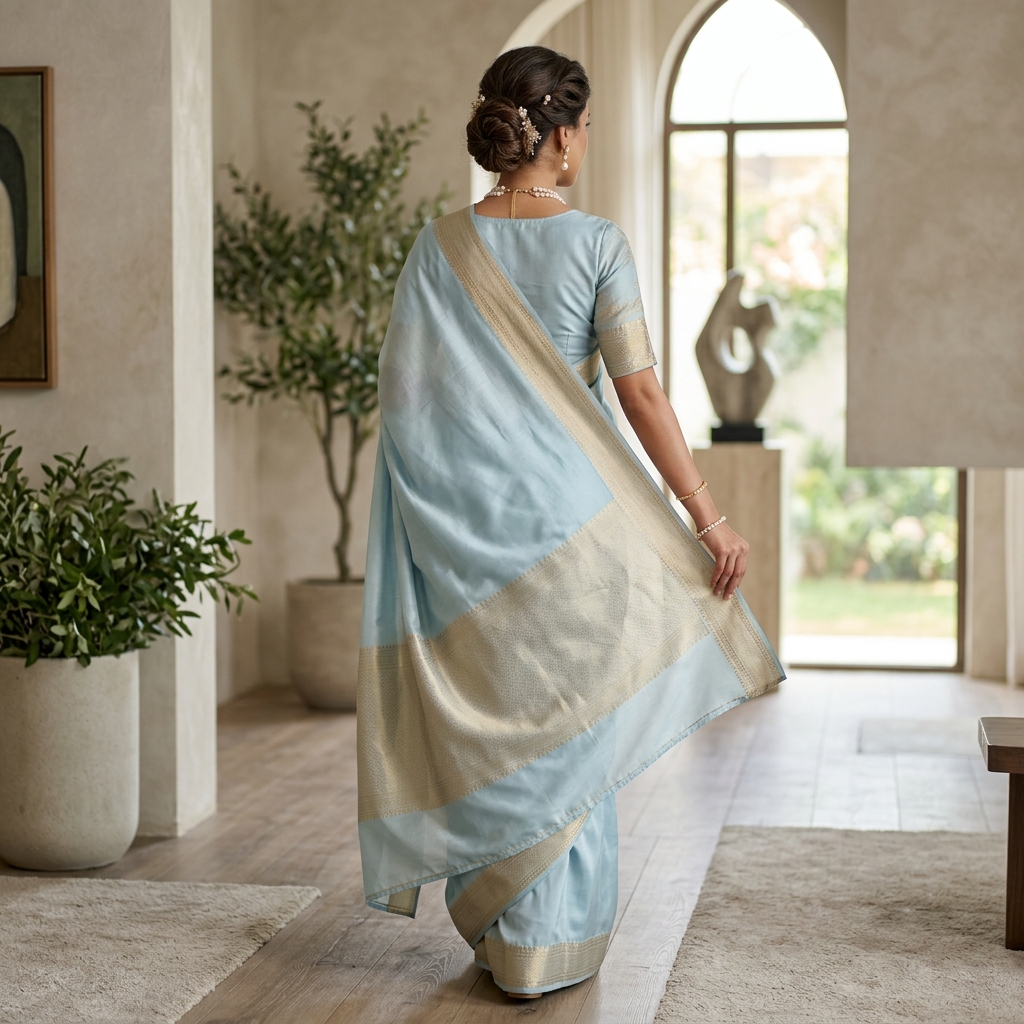
4. The Pastel Soft Silk — modern daytime elegance
Powder blue, sage, blush and champagne soft silks are the 2026 daytime favourite — fresh, understated, endlessly photogenic.
- Wear it to: daytime weddings, baby showers, brunches, receptions.
- Style it with: diamond or pearl jewellery.
5. The Soft Silk Pattu Saree — festive without fuss
A soft silk pattu with all-over zari buttas and a rich border is the go-to festive saree for South Indian women who want to look dressed-up but stay comfortable.
- Wear it to: weddings as a guest, festival gatherings.
- Style it with: a matching or contrast silk blouse.
6. The Contrast-Border Soft Silk — a pop of colour
A body in one shade with a boldly contrasting border (teal with pink, mustard with green) is the easiest way to look intentional and modern.
- Wear it to: any semi-formal occasion.
- Style it with: jewellery matched to the border.
7. The Dual-Tone Soft Silk — colour that shifts in the light
Dual-tone (two-colour warp-and-weft) soft silks change hue as you move — magenta-blue, green-gold, teal-purple.
- Wear it to: receptions, sangeets, evening functions.
- Style it with: neutral or silver-toned jewellery so the saree stays the star.
8. The Reception Soft Silk — bridal-adjacent, lighter
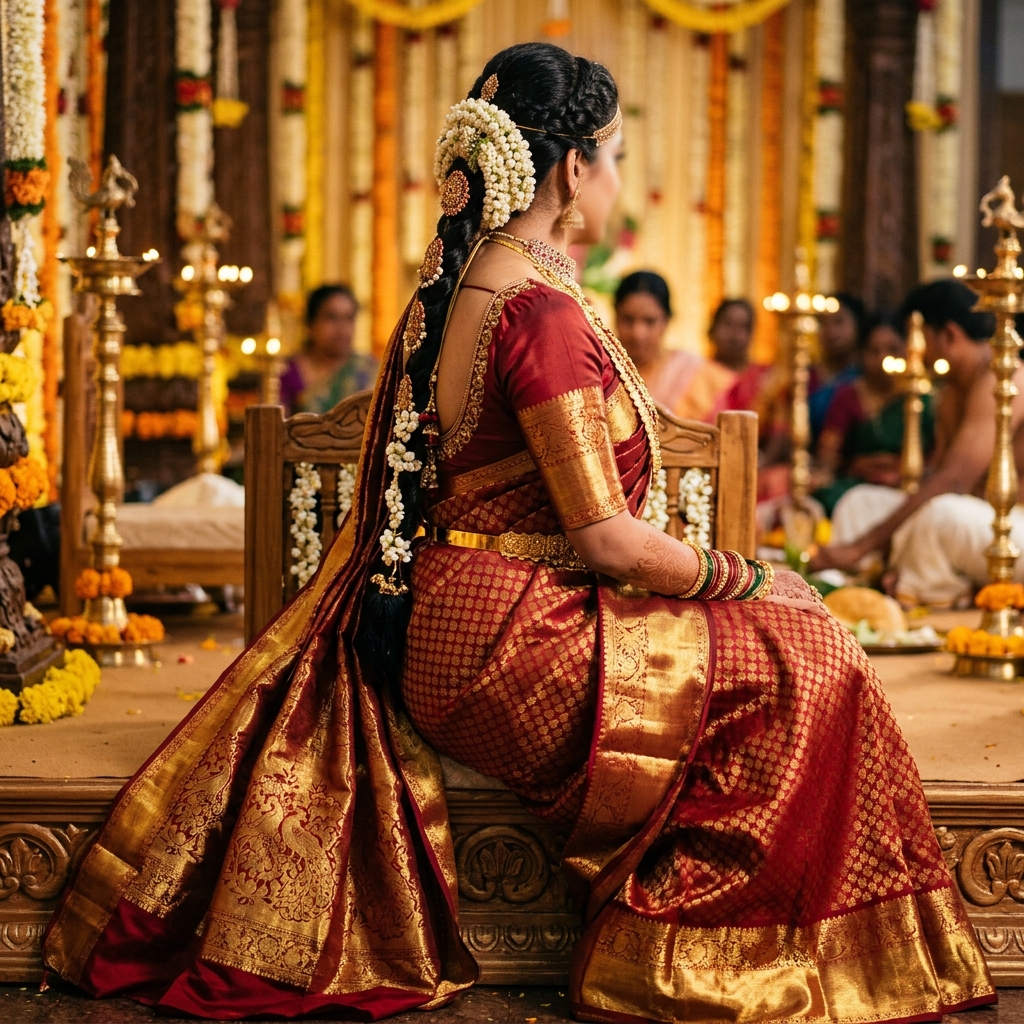
For the bride who wants a second, lighter saree for the reception or engagement, a richly-bordered soft silk in a jewel tone is perfect — glamorous but easy to carry all evening. (Pair it with your main Kanjeevaram bridal look.)
- Wear it to: your own reception or engagement.
- Style it with: statement jewellery and a designer blouse.
9. The Everyday Jewel-Tone Soft Silk — silk you'll actually re-wear
A simple ruby, emerald or sapphire soft silk with a fine border is the saree you'll reach for again and again.
- Wear it to: dinners, small functions, anniversaries.
- Style it with: whatever you already own — it's that versatile.
10. The Gifting Soft Silk — a safe, loved choice
Soft silk is the ideal gift saree — pure silk (so it feels special), lighter (so it's easy to wear), and reasonably priced (so you can gift generously) for mothers, aunts and relatives.
- Gift it for: weddings, Diwali, seemantham, house-warmings.
- Tip: our Monthly Saree Scheme is a lovely way to gift or save toward one.
How to style a soft silk saree
Soft silk is forgiving, which makes it fun to style:
- Blouse: a contrast blouse instantly modernises a soft silk — a deep jewel tone against a pastel saree, or an embroidered blouse against a solid one.
- Drape: because it's light, soft silk takes a neat pleat and a crisp pallu easily; a seedha pallu (front drape) shows off a rich border, while the classic nivi drape suits all-over designs.
- Jewellery: temple gold for festivals and temple visits; oxidised silver or a single statement piece for a modern, everyday look.
- Finish: keep it simple — juttis or block heels and a potli bag complete a festive soft silk look without competing with the silk.
Caring for your soft silk saree
- Dry-clean only — never machine wash pure silk.
- Store folded in a cotton cloth or muslin, away from damp and direct sunlight; re-fold along different lines every few months so creases don't set.
- Air it occasionally, and keep perfume and deodorant off the silk itself.
- Kept well, a good soft silk lasts 5–10 years of regular wear.
Buying soft silk sarees in Bangalore
Whether it's one everyday saree or a festive set, we'll help you pick the right weight, colour and border. Can't visit? Our Virtual Shopping sessions let you see the silk drape and shine over a video call. Browse our soft silk collection or talk to us — honest help, no pressure.
📌 Frequently asked questions
What is a soft silk saree? A saree woven from pure mulberry silk in a finer, lighter weave than a heavy Kanjivaram — keeping the silk sheen while being softer to drape and easier to wear.
What is the difference between soft silk and pure Kanchipuram silk? Both are pure mulberry silk, but Kanchipuram is heavier (600–800g+), crisper and pricier with dense zari, while soft silk is lighter (400–500g), softer-draping and more affordable. See our full Kanjivaram vs Banarasi guide for how the silks compare.
Are soft silk sarees pure silk? Yes — genuine soft silk is pure mulberry silk. Confirm with the Silk Mark certification, since "soft silk" is sometimes misused for blends.
How much do soft silk sarees cost? They're more affordable than heavy Kanjivarams — a friendly entry into pure silk — with price rising by silk weight and zari work.
🔗 Related reads
- Kanjivaram vs Banarasi: 9 Key Differences Every Bride Should Know
- 12 Breathtaking Kanjeevaram Bridal Saree Looks for the South Indian Bride
- 9 Foolproof Ways to Spot a Pure Kanjivaram Silk Saree
Aikyatha is a handloom silk saree house in Bangalore, weaving and curating pure Kanjeevaram, Banarasi and soft-silk sarees since 2018. Every pure-silk piece is Silk Mark verifiable.
{ "@context": "https://schema.org", "@type": "FAQPage", "mainEntity": [ { "@type": "Question", "name": "What is a soft silk saree?", "acceptedAnswer": { "@type": "Answer", "text": "A saree woven from pure mulberry silk in a finer, lighter weave than a heavy Kanjivaram, keeping the silk sheen while being softer to drape and easier to wear." } }, { "@type": "Question", "name": "What is the difference between soft silk and pure Kanchipuram silk?", "acceptedAnswer": { "@type": "Answer", "text": "Both are pure mulberry silk, but Kanchipuram is heavier (600 to 800g or more), crisper, and pricier with dense zari, while soft silk is lighter (400 to 500g), softer to drape, and more affordable." } }, { "@type": "Question", "name": "Are soft silk sarees pure silk?", "acceptedAnswer": { "@type": "Answer", "text": "Yes. Genuine soft silk is made from pure mulberry silk. Look for the Silk Mark certification, as the term 'soft silk' is sometimes used for blended fabrics." } }, { "@type": "Question", "name": "How much do soft silk sarees cost?", "acceptedAnswer": { "@type": "Answer", "text": "Soft silk sarees are generally more affordable than heavy Kanjivaram sarees. The price depends on the silk quality, weight, weaving technique, and zari work." } } ] }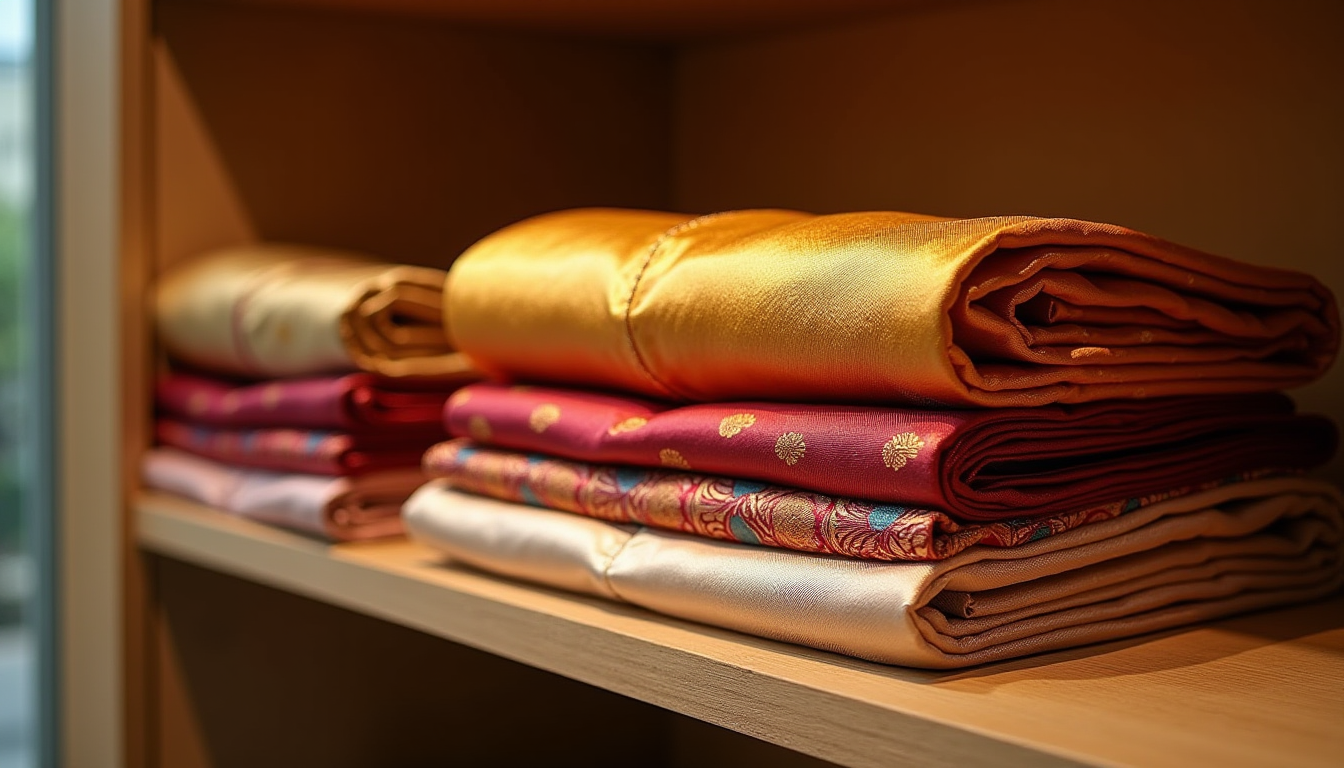



Share Product