

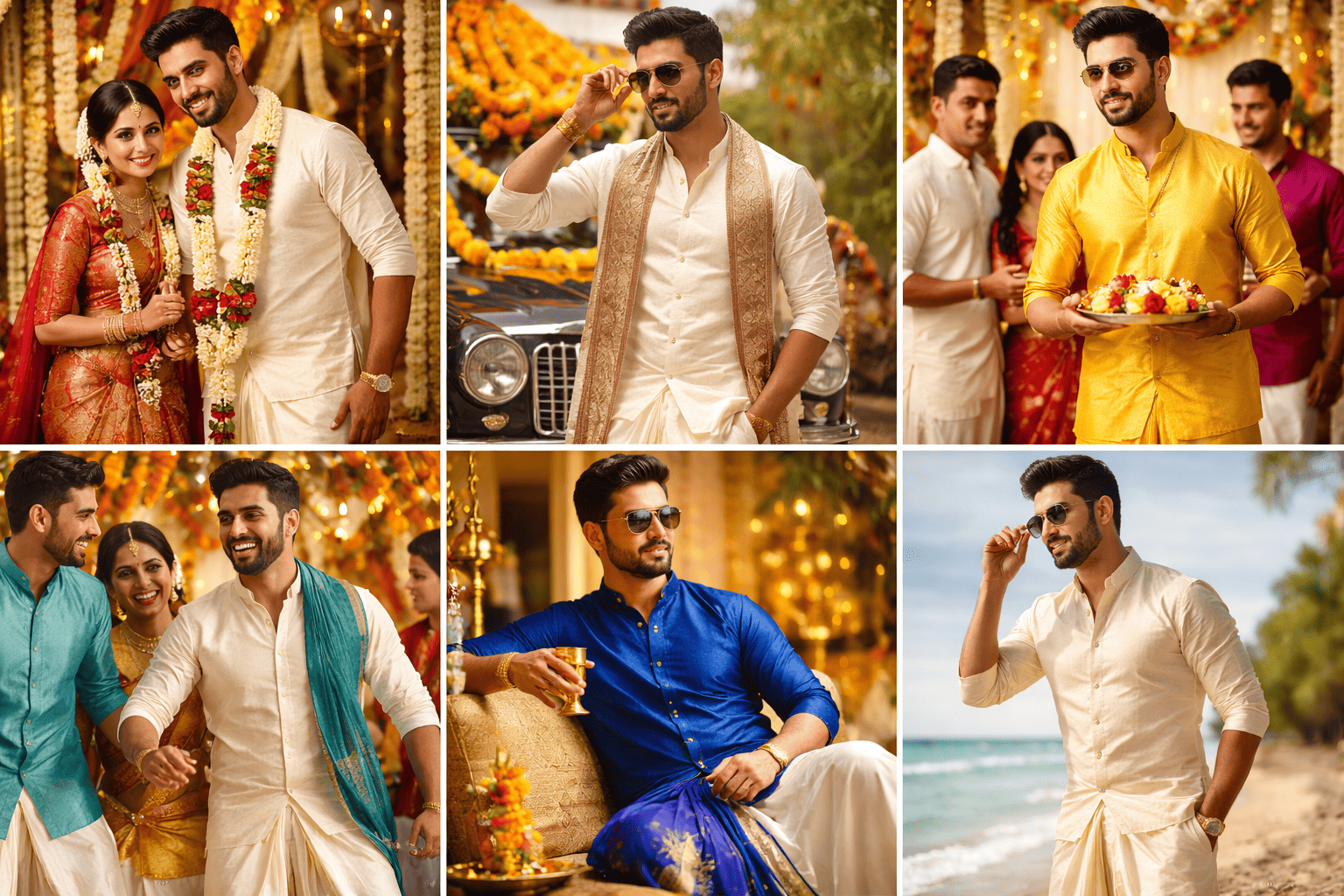
You stand at the centre of a moment that matters — a wedding ceremony, a sacred ritual, a celebration where family and tradition come together. In that space, what you wear is not just attire. It is identity.
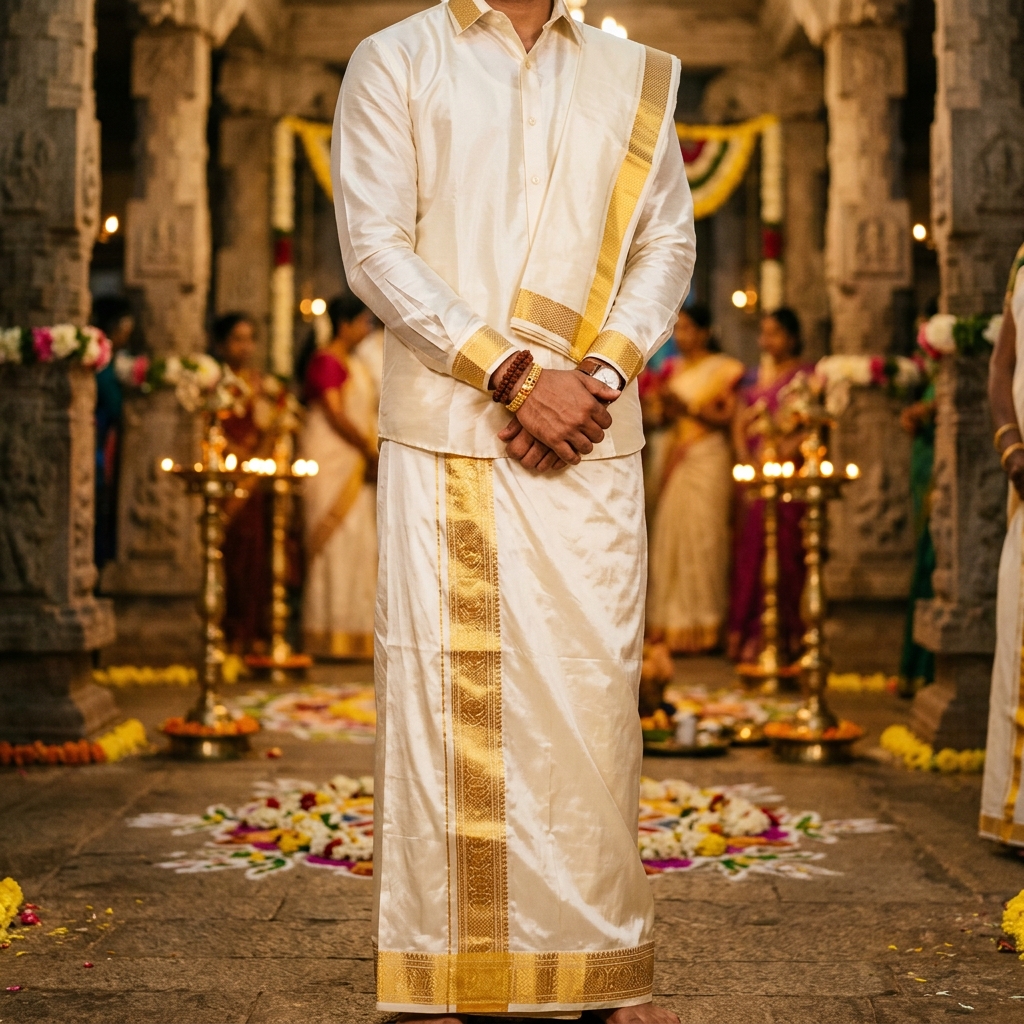
When you choose a pure silk dhoti, you choose presence. The way a pure silk dhoti falls with structure, catches light with quiet sheen, and frames your stance with dignity — it speaks before you do. There is no excess, no distraction. Just confidence rooted in heritage.
In these defining occasions, a traditional silk dhoti does more than follow custom. It honours lineage. It reflects respect for ritual. It carries the understated authority that modern fashion often overlooks.
Across generations, this refined expression of traditional south Indian attire has symbolised grace and strength. Today, more men are returning to this timeless mens silk wear — not out of nostalgia, but out of intention.
In this article, we explore six occasions where a pure silk dhoti makes a lasting statement — and why it continues to remain an essential part of meaningful celebrations.
Why the Pure Silk Dhoti Still Holds Its Place
The enduring relevance of a pure silk dhoti lies in what it represents. It is not simply ceremonial attire — it is a symbol of cultural pride, refinement, and timeless elegance. In a world where menswear constantly evolves, the pure silk dhoti remains steady, grounded in heritage yet effortlessly commanding in presence.
Unlike everyday cotton veshtis, a traditional silk dhoti carries weight — both literal and symbolic. Its structured drape, luminous sheen, and defined borders create a stature that cotton cannot replicate. Where a cotton veshti is functional, silk is expressive. It marks significance. It signals occasion.
Why do traditional silk dhoti styles remain relevant across generations?
They are rooted in ritual and cultural continuity
Their craftsmanship enhances stature and silhouette
Their silk texture adds quiet grandeur to sacred moments
Their elegance adapts seamlessly from temple ceremonies to wedding mandaps
The beauty of this traditional south Indian attire is that it does not compete with fashion — it transcends it. A handwoven silk dhoti worn today carries the same dignity it did decades ago.
At Aikyatha, our curation of mens silk wear is guided by meaning, not trend. We select silks that honour tradition, preserve craftsmanship, and ensure that every pure silk dhoti chosen is aligned with the occasion it is meant to serve — not just for the day, but for the memory it creates.
Here’s another resource you’ll find useful: Wedding Kanchi Pattu Sarees: 7 Mistakes Brides Make (And How Aikyatha Helps You Avoid Them All)
Occasion 1: Weddings & Sacred Ceremonies
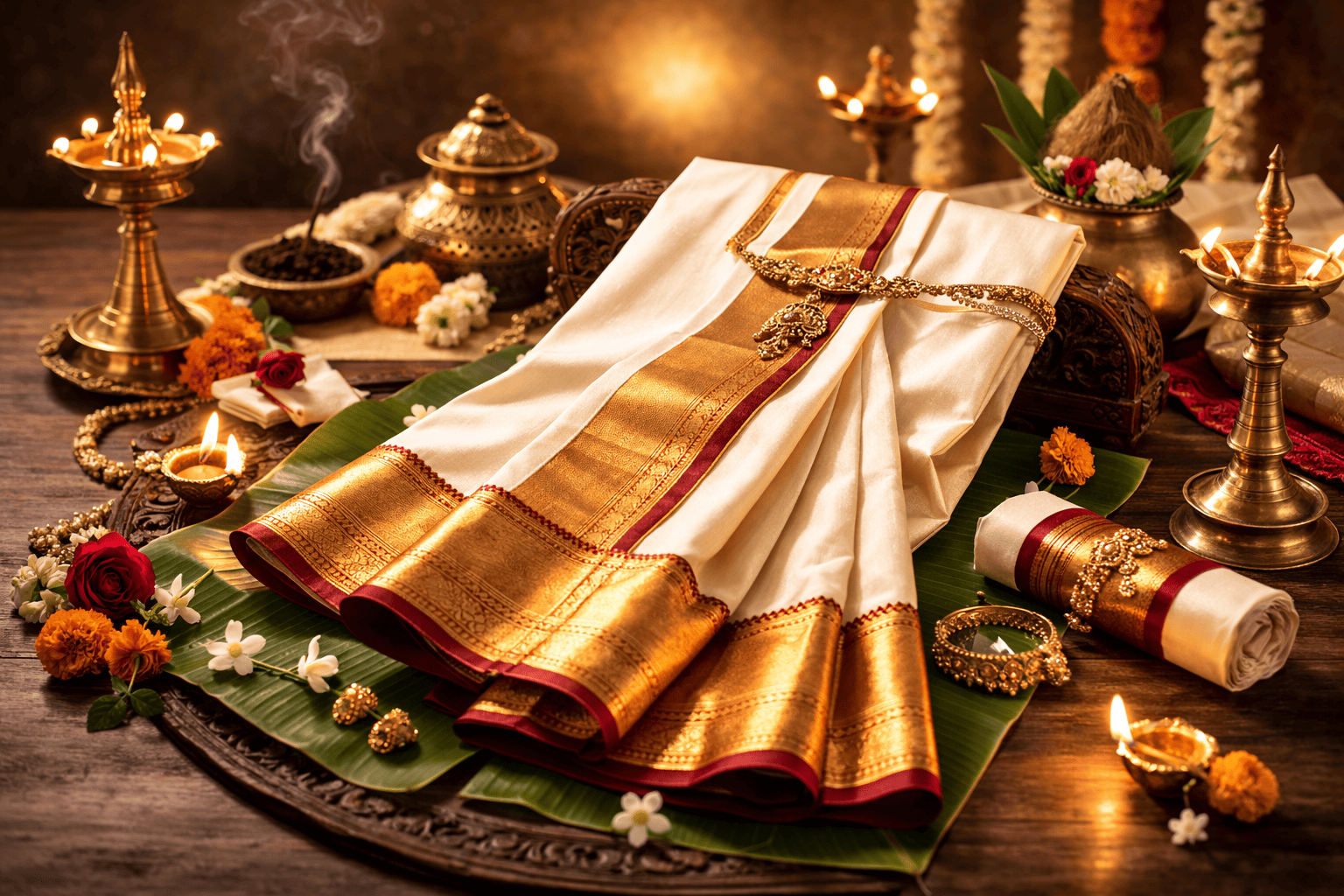
In a wedding, every detail carries meaning — especially what the groom chooses to wear. For muhurtham and sacred rituals, a pure silk dhoti remains irreplaceable. It reflects reverence for tradition and the gravity of the moment.
A wedding silk dhoti brings refinement that everyday attire cannot match. The richness of silk, the firmness of its drape, and the elegance of its zari border create a presence that feels dignified and ceremonial. A pure silk dhoti holds its structure through long rituals, maintaining poise and stature.
What makes a silk dhoti for weddings truly distinct?
The natural sheen that reflects beautifully under temple lights
Structured folds that frame posture with authority
Borders that define movement with understated elegance
Fabric strength that endures extended ceremonies
Beyond aesthetics, a silk dhoti for weddings carries symbolic depth — honouring lineage, responsibility, and cultural continuity.
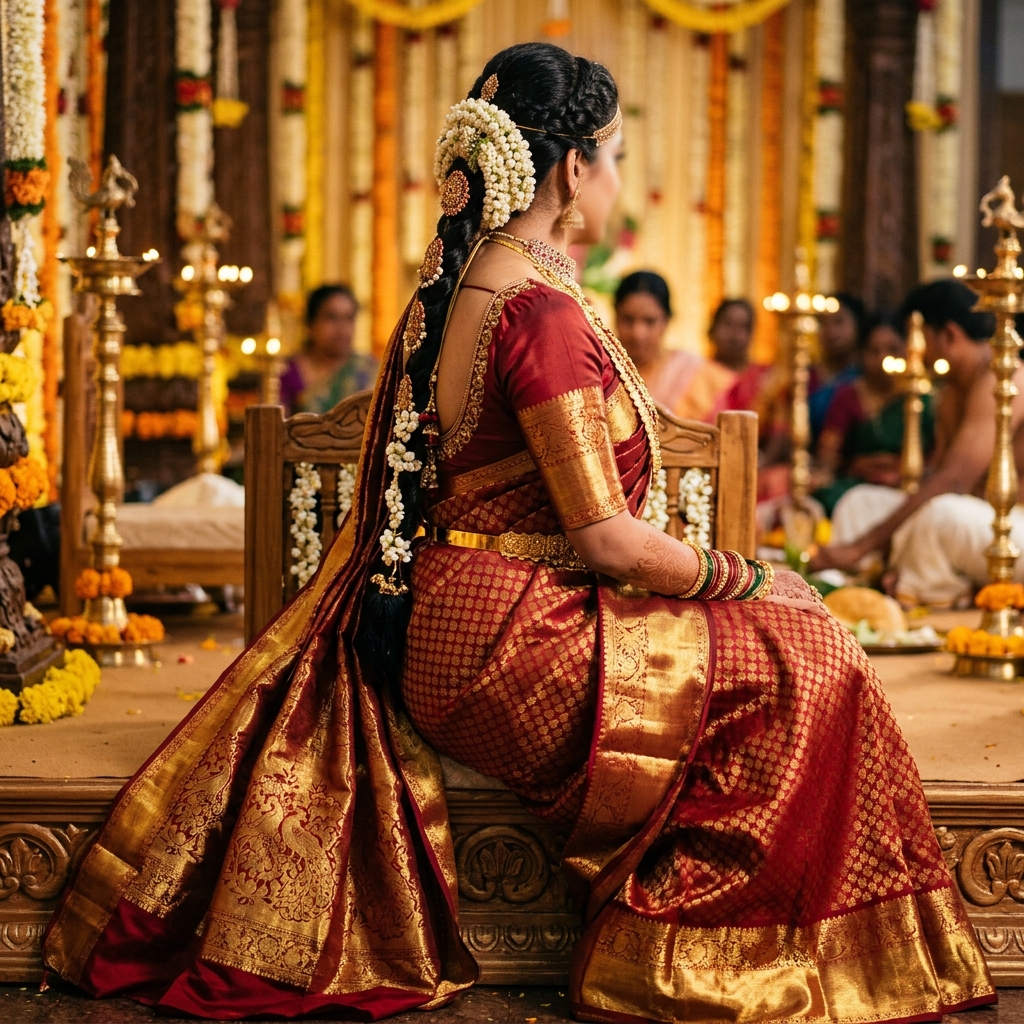
At Aikyatha, we curate coordinated ensembles for grooms and families — aligning the wedding silk dhoti with angavastrams, silk shirts, and complementary bridal silks to create a harmonious and heritage-led celebration.
Occasion 2: Engagements, Receptions & Family Celebrations
Not every celebration is bound by strict ritual — but when refined tradition matters more than formality, attire still carries meaning. For engagements, receptions, and milestone family gatherings, a pure silk dhoti offers the perfect balance between elegance and cultural pride.
Unlike heavily ceremonial wear, a pure silk dhoti in softer tones or subtle zari allows you to honour tradition without appearing overly formal. It signals occasion — without excess.
Why does a handwoven silk dhoti elevate celebratory moments?
The natural silk sheen enhances presence in evening lighting
The structured drape creates a polished silhouette
Subtle borders add sophistication without overpowering the look
It blends seamlessly with both traditional and contemporary styling
Whether styled with a refined kurta or paired with a classic angavastram, this form of mens silk wear adds understated grandeur to gatherings where family and heritage remain central.
At Aikyatha, we guide you in pairing silk dhotis thoughtfully — selecting complementary angavastrams, silk shirts, and kurtas that enhance proportion and colour harmony. The goal is not just to dress for the occasion, but to arrive with presence — rooted in tradition, styled with confidence.
Occasion 3: Temple Visits & Religious Observances
In sacred spaces, simplicity carries the greatest power. Choosing a pure silk dhoti for temple visits and religious observances reflects respect — for the ritual, the setting, and the tradition itself.
A pure silk dhoti, often worn as a pure silk veshti, holds deep cultural significance in traditional south Indian attire. Silk has long been considered auspicious — its purity symbolising sanctity, prosperity, and devotion. The natural sheen of silk, paired with its clean, structured drape, aligns beautifully with the dignity expected in sacred environments.
Why is silk preferred for religious moments?
It is associated with purity and ceremonial importance
Its texture and fall maintain neatness during rituals
It reflects light subtly without distraction
It honours age-old customs across generations
At Aikyatha, we ensure that every pure silk veshti is selected with comfort and authenticity in mind. From breathable weaves to balanced borders, each pure silk dhoti is curated to offer ease of movement while preserving elegance — allowing you to focus fully on devotion, not attire.
Occasion 4: Festivals & Cultural Gatherings
From Diwali celebrations to family poojas and cultural gatherings, festivals call for attire that feels celebratory yet rooted. A pure silk dhoti achieves that balance effortlessly — festive without being extravagant, traditional without being rigid.
During such occasions, clothing reflects joy as much as heritage. The natural sheen of a pure silk dhoti enhances the festive atmosphere, while its structured drape maintains cultural dignity. It stands apart from everyday wear, signalling that the moment is special.
Why do silk dhotis remain ideal for festivals?
Silk adds richness without overwhelming simplicity
The texture reflects festive lighting beautifully
It pairs seamlessly with vibrant kurtas and angavastrams
It honours traditional south Indian attire while allowing personal styling
Festivals are often when younger generations reconnect with heritage. Choosing mens silk wear during these gatherings becomes a subtle yet powerful expression of identity.
At Aikyatha, we help men rediscover the elegance of classic mens silk wear — curating pure silk dhotis that balance comfort, celebration, and cultural authenticity for every meaningful occasion.
Occasion 5: Groom’s Family & Wedding Hosting Roles
A wedding is not defined by the groom alone. Fathers, brothers, and elders hold visible, dignified roles throughout the ceremony — welcoming guests, leading rituals, and representing the family. In these moments, a pure silk dhoti becomes the natural choice.
A pure silk dhoti conveys stature without excess. It signals responsibility, respect for tradition, and quiet authority. Unlike everyday attire, a traditional silk dhoti frames posture with structure and presence — especially during sacred rituals and formal hosting moments.
Why do family elders and key members choose silk?
It reflects cultural pride and ceremonial importance
It enhances presence during public-facing roles
It aligns visually with bridal and groom ensembles
It maintains elegance across long wedding functions
When coordinated thoughtfully, traditional south Indian attire creates visual harmony across generations.
At Aikyatha, we curate family ensembles for weddings — aligning silk dhotis for weddings with complementary angavastrams, silk shirts, and bridal silks. The result is a cohesive celebration where every member reflects dignity, tradition, and unity.
Related read: How to Choose the Perfect Pure Silk Dhoti for Weddings & Rituals
Occasion 6: Heritage Events & Formal Cultural Functions
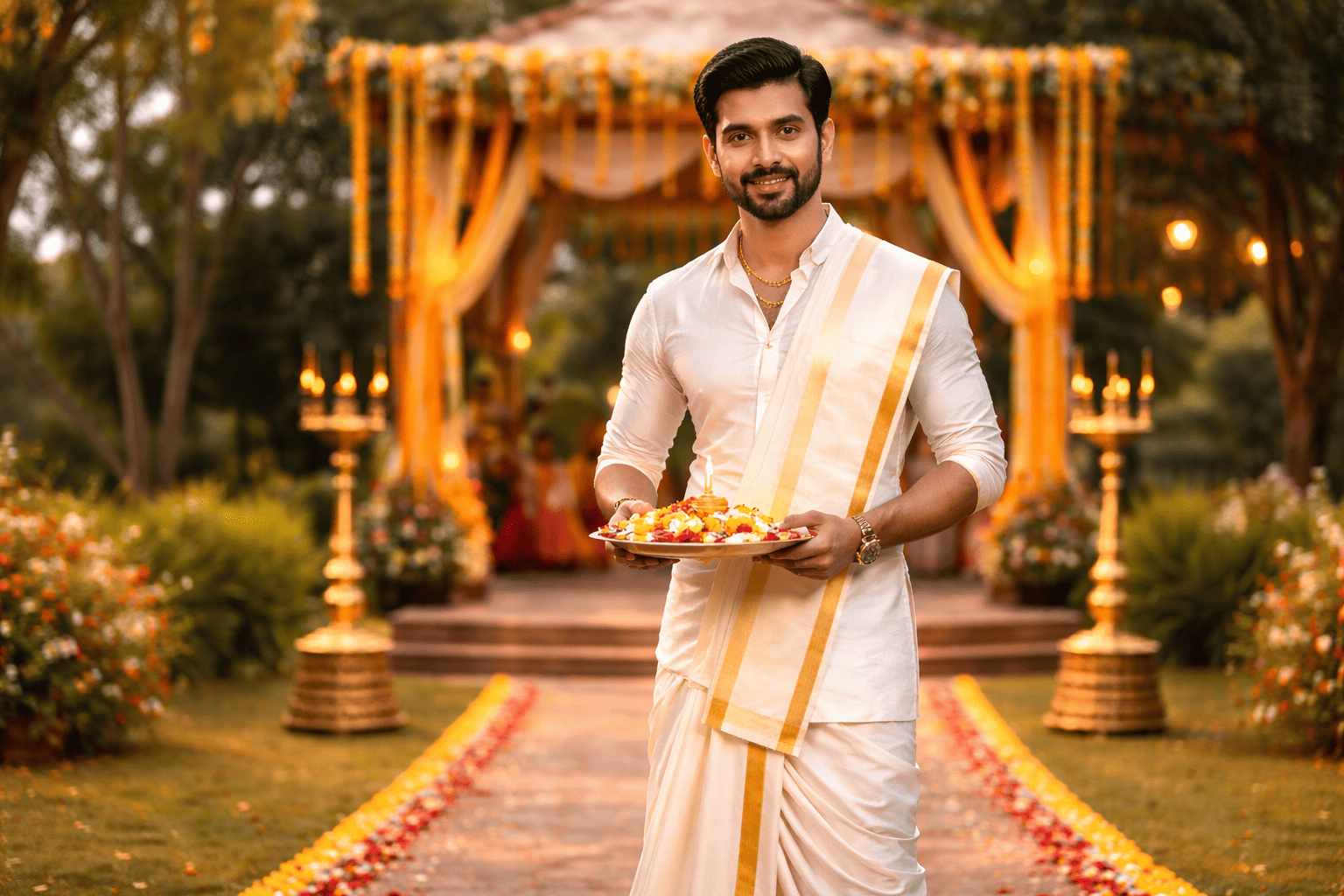
From classical concerts and cultural sabhas to milestone ceremonies and formal wedding receptions, certain spaces demand quiet refinement. In such settings, a pure silk dhoti feels instinctively appropriate — dignified, composed, and rooted in tradition.
A pure silk dhoti aligns seamlessly with heritage environments. The structured fall, subtle sheen, and defined borders complement the aesthetic of temple halls, music auditoriums, and ceremonial venues. It does not appear styled for effect — it appears naturally suited to the space.
Why do handwoven silk dhoti styles work so well in these occasions?
They reflect cultural authenticity without appearing theatrical
Their texture enhances presence under soft, traditional lighting
They balance simplicity with understated grandeur
They honour traditional south Indian attire while remaining refined
In heritage settings, elegance should never feel forced.
At Aikyatha, our philosophy is simple — true elegance should feel effortless, not styled. We curate mens silk wear that allows a pure silk dhoti to speak through craftsmanship and authenticity, ensuring you belong to the moment rather than dressing for it.
The Aikyatha Perspective on Men’s Silk Wear
At Aikyatha, men’s silk collections are curated with the same depth of care as our women’s silks. A pure silk dhoti is not treated as an accessory — it is regarded as a garment of cultural importance.
Our focus remains clear:
Authentic silk and traditional weaving integrity
Craftsmanship that ensures structure, comfort, and longevity
Borders and finishes that reflect dignified aesthetics
Styles rooted in heritage, not fleeting fashion
Every pure silk dhoti is selected with attention to proportion, occasion, and presence — ensuring it aligns not just with the ceremony, but with the man wearing it.
Through in-store consultations across Bengaluru and personalised virtual guidance, we help men choose with clarity and confidence. Because selecting traditional south Indian attire should feel considered, not complicated.
Elegant Closing
A pure silk dhoti is not worn to stand out — it is worn to belong, with grace.
Whether for a wedding, a sacred ritual, or a celebration close to the heart, the quiet authority of a pure silk dhoti lies in its authenticity. It honours lineage, reflects respect, and carries timeless elegance without excess.
At Aikyatha, we curate men’s silks that honour tradition while embracing refinement.
Discover pure silk dhotis and thoughtfully selected mens silk wear at our Bengaluru boutiques in Malleswaram, Jayanagar, and Marathahalli, or book a personalised consultation — in-store or virtually — and choose tradition with confidence.
FAQ’s
- 1. What makes a pure silk dhoti different from a regular veshti?
A pure silk dhoti is crafted from high-quality silk yarn, offering superior sheen, structure, and durability compared to everyday cotton veshtis. While cotton is suitable for daily wear, silk adds ceremonial richness, making it ideal for weddings, festivals, and religious occasions.
- 2. Is a pure silk dhoti suitable for weddings?
Yes. A pure silk dhoti is a traditional choice for grooms, fathers, and family members during weddings. Its structured drape and elegant borders enhance presence during rituals, making it the preferred silk dhoti for weddings and sacred ceremonies.
- 3. How should I style a pure silk veshti for formal occasions?
A pure silk veshti pairs well with a silk shirt, kurta, or angavastram. For weddings and formal functions, coordinated colours and zari borders elevate the look. Choosing the right traditional silk dhoti ensures balance between celebration and cultural authenticity.
- 4. Are handwoven silk dhotis better than machine-made ones?
Yes. A handwoven silk dhoti offers better durability, richer texture, and stronger borders. Handloom craftsmanship preserves authenticity and ensures the garment retains its structure over time, making it a meaningful investment in traditional south Indian attire.
- 5. Where can I buy authentic pure silk dhotis in Bengaluru?
It is best to purchase a pure silk dhoti from a trusted silk boutique that prioritises authenticity and craftsmanship. At Aikyatha, curated mens silk wear collections are available at our showrooms in Malleswaram, Jayanagar, and Marathahalli, along with personalised in-store and virtual consultations.



Share Product