

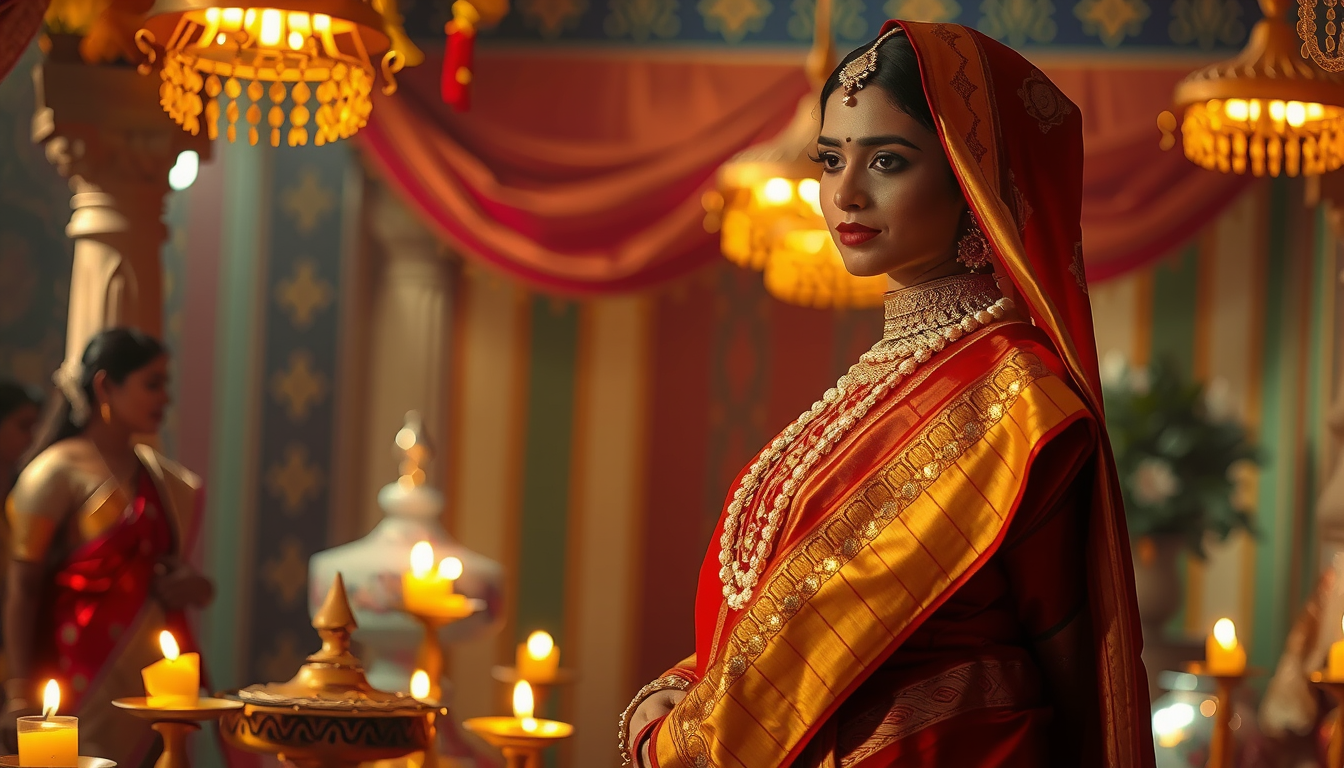
A South Indian bridal saree is never just an outfit. It carries region, ritual and family memory in its weave. Whether you are a Tamil, Telugu, Kannadiga or Malayali bride — or marrying into a tradition different from your own — this guide explains the colours, the drapes and the customs so you can choose with confidence and meaning.
We have drawn it from years of dressing brides at Aikyatha, and from the questions we hear most often across our Bangalore showrooms.
Why the Kanjeevaram is the heart of the South Indian trousseau
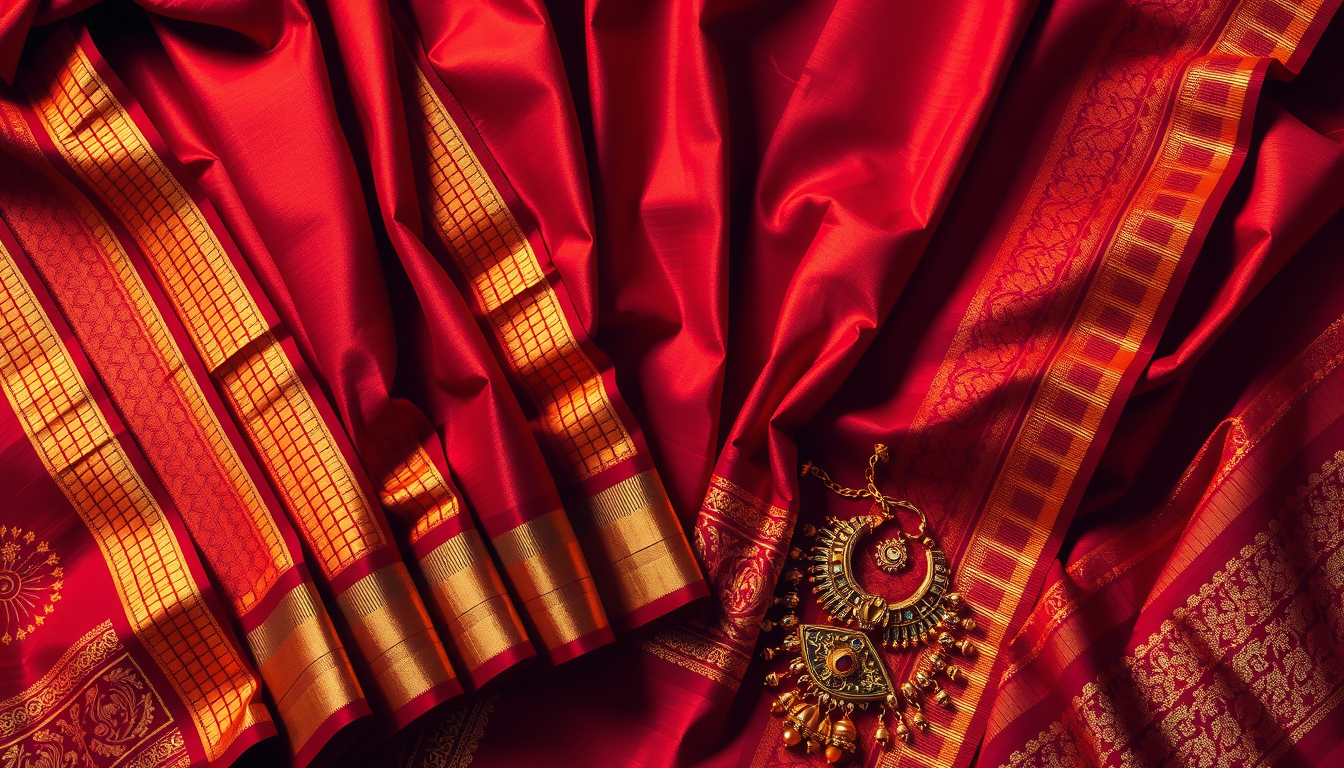
Across South India, the Kanjeevaram (Kanchipuram) silk saree is the undisputed bridal classic. Its pure mulberry silk, contrast korvai borders and gold zari make it grand enough for the muhurtham and sturdy enough to become an heirloom. If you buy one saree for your wedding, tradition says it should be a Kanjeevaram — and our brides consistently agree, as you will see in our edit of timeless South Indian bridal designs.
Bridal colours and what they mean
Colour in a South Indian wedding is symbolic. Choosing with intent makes your saree feel personal rather than picked off a shelf.
- Red & maroon: the most auspicious bridal colours — prosperity, Devi's blessing and married life.
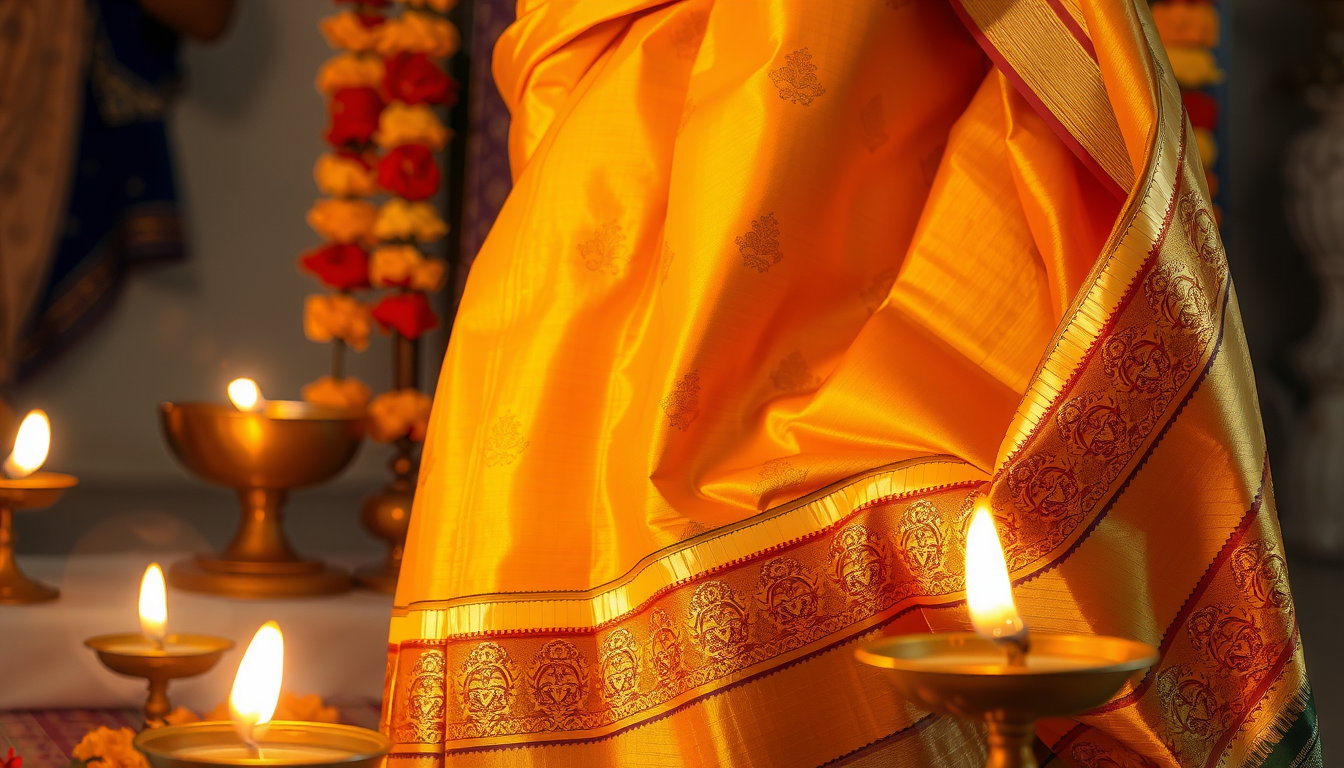
- Gold & mustard: purity and auspicious beginnings; magnificent in daylight muhurthams.
- Green: fertility, new life and Lakshmi's grace — a favourite for Varalakshmi and post-wedding rituals.
- Arakku (deep wine) & peacock blue: regal, photogenic reception choices.
For a fuller breakdown, our South Indian wedding saree colours guide pairs each shade with the ritual it suits best.
The drapes — one saree, many traditions
The same nine or six yards is worn differently across the South. Knowing your family's style helps you pick the right length and weight.
Madisar (Tamil Iyer & Iyengar brides)
The traditional nine-yard drape worn for the wedding rituals. It needs a longer, well-bodied saree — tell your saree consultant if you plan to wear madisar so the length is right.
Seedha pallu & Kachcha (Telugu & Kannada brides)
Telugu and Kannadiga brides often favour a front pallu or a pinned drape that showcases the border and pallu zari beautifully in photographs.
Kerala Kasavu (Malayali brides)
The cream-and-gold Kasavu is the signature Malayali bridal look — understated, luminous, and increasingly chosen for engagements and receptions even outside Kerala.
Building your bridal saree wardrobe
Most South Indian brides need more than one saree. A practical trousseau usually looks like this:
- The muhurtham saree — your heaviest, most traditional Kanjeevaram.
- The reception saree — a jewel tone or a pastel Kanjeevaram for a modern, softer look.
- Function sarees — lighter silks for the nichayathartham, mehendi and smaller ceremonies.
Coordinating them as a set — rather than buying one at a time — keeps your bridal palette cohesive across the whole wedding.
Jewellery and styling
A South Indian bridal saree is completed by temple jewellery — the long haaram, the maang tikka, the vanki, and jhumkas. Let the saree lead: a heavy zari pallu pairs best with classic antique-gold temple sets, while a simpler saree can carry more elaborate jewellery. Fresh jasmine in the hair is the finishing touch no accessory can replace.
Why brides choose Kanjeevaram for the big day
Beyond beauty, the Kanjeevaram endures. It survives generations, holds its colour, and gains meaning with every wearing. That is exactly why, from rituals to receptions, it remains the saree South Indian brides return to.
Shopping for your bridal saree in Bangalore
At Aikyatha, our bridal consultants help you match saree, drape and jewellery to your specific tradition — Tamil, Telugu, Kannada or Malayali. Explore the Kanjeevaram bridal collection at our Malleshwaram, Jayanagar and Marathahalli stores, browse coordinating accessories, or book a virtual appointment to begin from home. Planning across many functions? Our monthly saree scheme makes building the full trousseau easier.
Frequently asked questions
How many sarees does a South Indian bride typically need?
Most brides plan for three to five — one heavy muhurtham Kanjeevaram, a reception saree, and lighter silks for the surrounding functions.
Can I wear a pastel saree as a South Indian bride?
Absolutely. Pastels have become a favourite for receptions and engagements. Many brides keep a traditional red for the muhurtham and choose a pastel Kanjeevaram for a softer, contemporary reception look.
What is the difference between a nine-yard and six-yard bridal saree?
The nine-yard (madisar) is worn for specific Tamil Brahmin wedding rituals and needs a longer saree; the six-yard is the standard drape for most other functions and traditions.



Share Product