

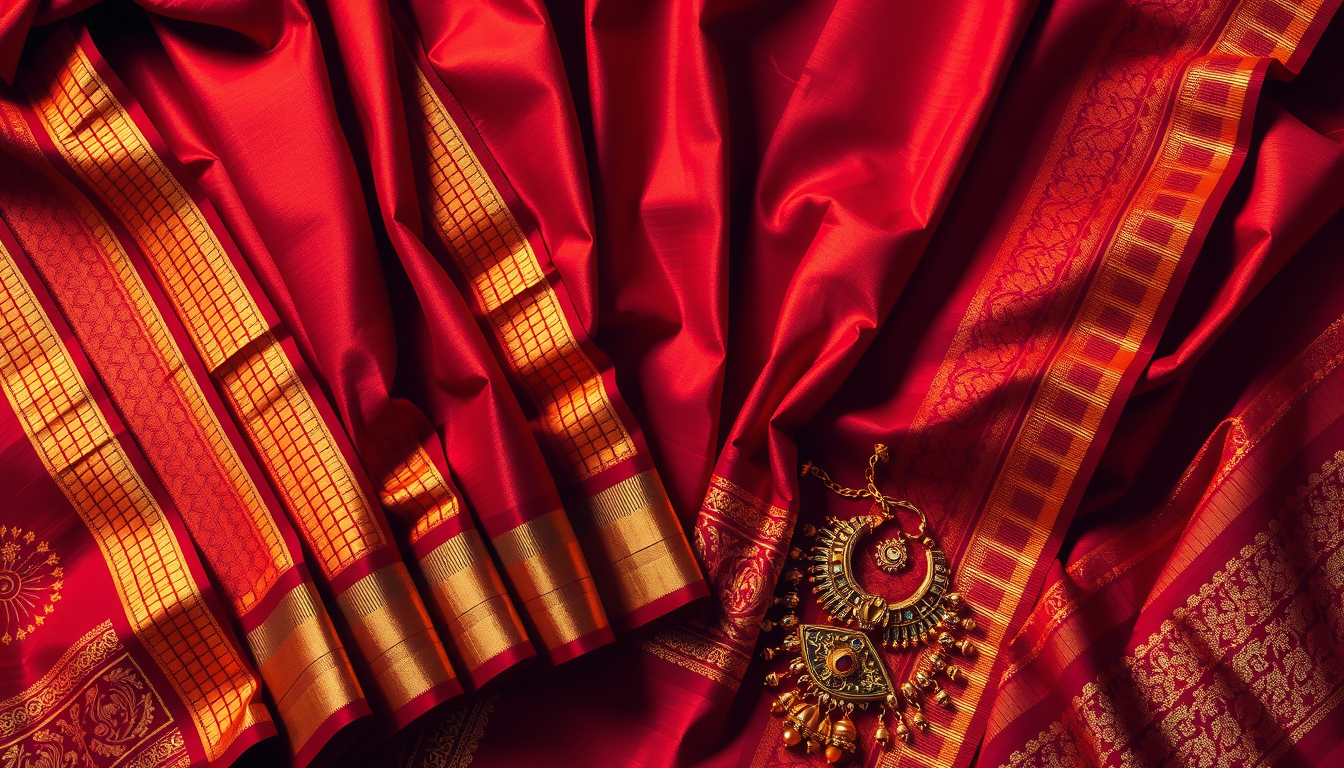
Choosing a Kanjivaram silk saree for your wedding is one of the most personal decisions you will make as a bride. It is the saree in every photograph, the one your mother will remember, and very often the one that becomes an heirloom. Yet most brides walk into a showroom dazzled by colour and walk out unsure whether they paid for pure silk or a clever imitation.
This guide is the one we wish every bride had before shopping for bridal sarees in Kanchipuram silk. It covers colour, zari, weight, weave, budget and authenticity — in plain language, from a silk house that has been draping Bangalore brides for years.
Start with the occasion, not the colour
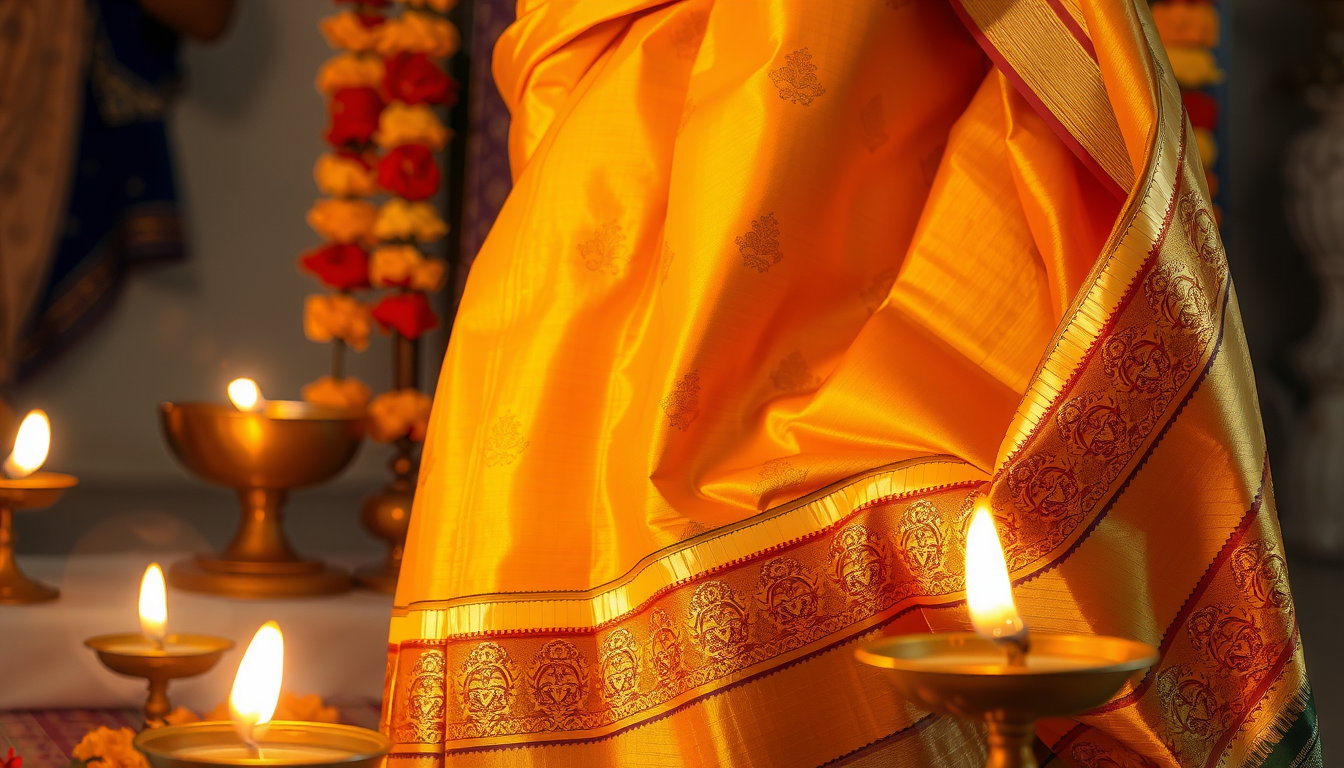
Brides usually begin with a colour in mind. Start instead with where the saree will be worn. A muhurtham saree seen in bright daylight and photographed from every angle needs a different treatment from a reception saree worn under warm indoor lighting.
- Muhurtham / wedding ceremony: traditional reds, maroons, mustard and temple-border classics that photograph richly in daylight.
- Reception: deeper jewel tones, pastels or contemporary colour-blocking that glow under indoor light.
- Engagement and smaller functions: lighter pastel Kanjivarams that let you move and sit comfortably through a long day.
Once the occasion is fixed, colour choices narrow quickly — and you stop comparing sarees that were never meant for the same moment.
Understand what you are actually paying for
The price of a Kanjivaram is decided by three things: the silk, the zari, and the labour of the weave. Knowing how each works protects you from overpaying.
The silk
A pure Kanjivaram is woven from mulberry silk, with three threads twisted together for that famous body and sheen. It feels substantial in the hand and drapes with weight. If a "silk" saree feels papery or slippery-light, ask questions.
The zari
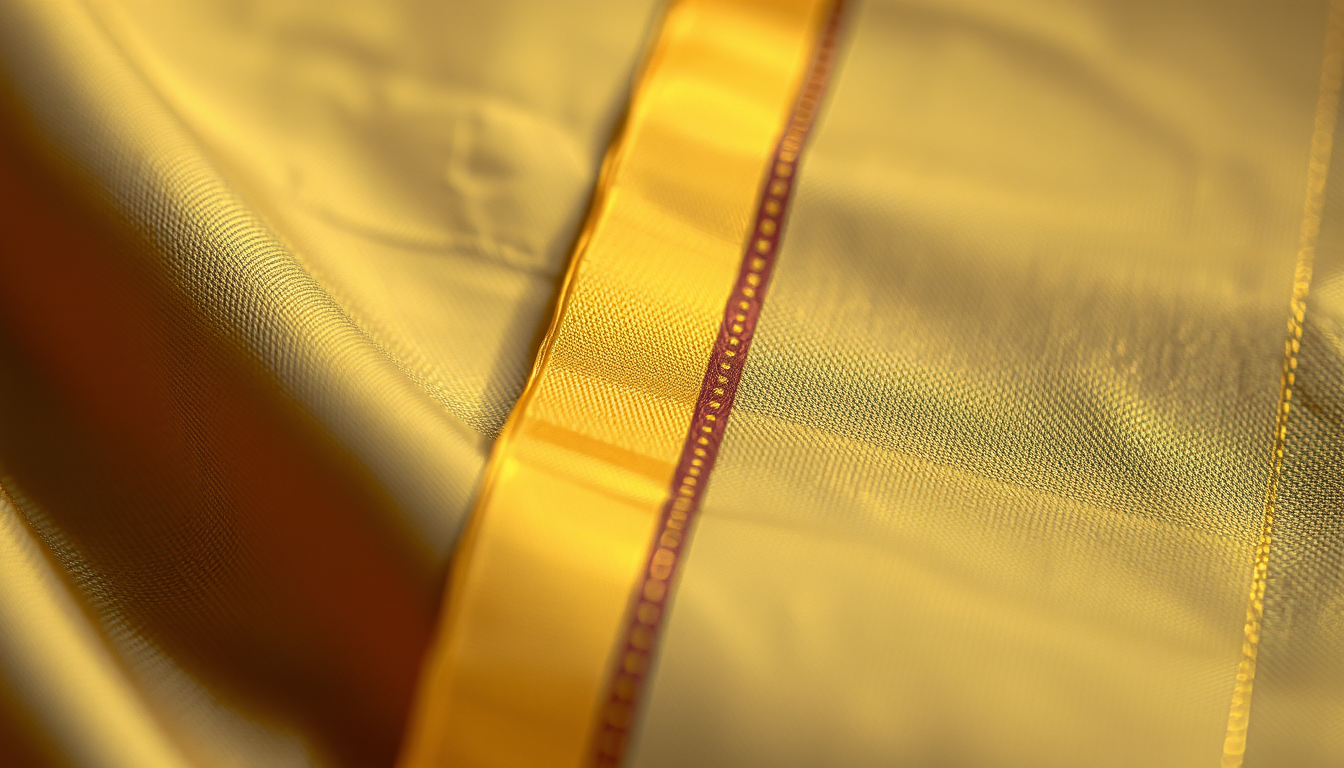
Traditional zari is silk thread wrapped in silver and dipped in gold. It is why genuine Kanjivarams carry real value. Modern tested zari and imitation zari cost far less — perfectly fine for a lighter budget, as long as you are told which one you are buying.
The weave
The heavier the pallu and border work, the more loom hours it took. A korvai border — where border and body are woven in different colours and interlocked by hand — is a mark of craftsmanship worth paying for.
Weight: heavier is not always better
Bridal Kanjivarams are meant to have presence, but you also have to carry yours through hours of rituals. If you are petite or the ceremony is long, a soft-silk Kanjivaram gives you the grandeur of the weave with far more comfort. Hold the saree, drape the pallu over your shoulder in the shop, and see how it sits before you fall for the border alone.
Colour and its meaning
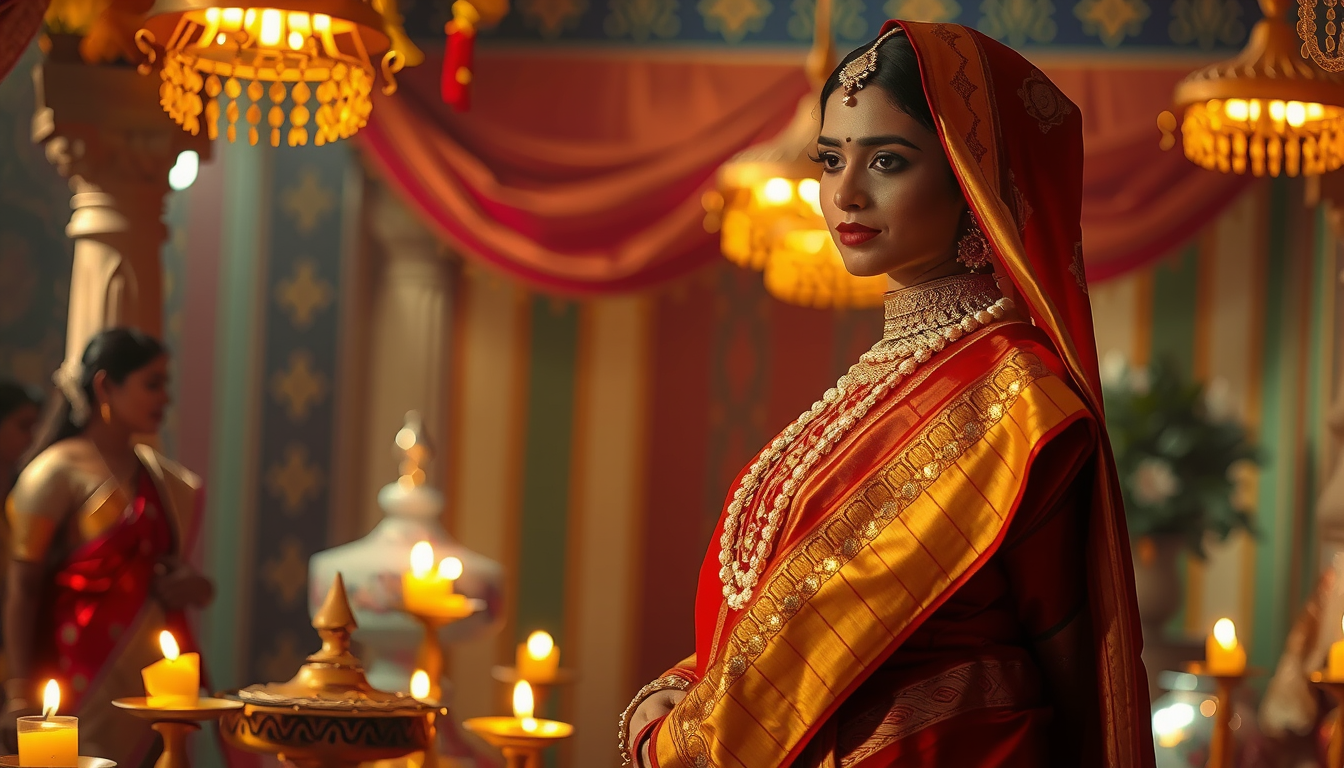
South Indian bridal colours carry meaning, not just aesthetics. Red signifies prosperity and Devi's blessing; green stands for new beginnings and fertility; gold and mustard for auspiciousness. Many brides choose a classic for the muhurtham and something more personal for the reception. We have written a full breakdown in our guide to South Indian wedding saree colours if you want to go deeper.
Don't forget the blouse and the fall
A bridal saree is judged as much by its blouse as its body. Decide early whether you want a contrast blouse (dramatic, photographs beautifully) or a matching one (classic, elongating). Our blouse guide for Kanjeevaram bridal sarees walks through necklines, sleeves and zari-matching. And always get the fall and pico done — it protects the border and improves the drape.
Authenticity: the one check you must not skip
Before you pay bridal prices, confirm you are buying the real thing. Look for the Silk Mark (a hologram tag issued by the Silk Mark Organisation of India) and, ideally, the Handloom Mark. Genuine zari, real weight, and a clear invoice that names the silk and zari type are your protection. If you want to learn the tells yourself, read our piece on features only authentic Kanchipuram sarees have.
Set a budget — and a range
Bridal Kanjivarams span a wide range. A realistic approach is to set a comfortable number and a stretch number, then let authenticity and weave — not just colour — decide where you land. A genuine, well-woven saree at a fair price will always outlast a heavier-looking imitation.
Shopping in Bangalore
If you are shopping in the city, it helps to see and feel sarees in person before deciding. At Aikyatha, you can browse our bridal Kanjivaram silk saree collection across our Malleshwaram, Jayanagar and Marathahalli showrooms, or book a virtual shopping session if you would rather start from home. Every saree we sell is Silk Mark assured, so the authenticity question is settled before you even ask.
Frequently asked questions
How many months before the wedding should I buy my Kanjivaram?
Ideally two to three months ahead — enough time for blouse stitching, fall-and-pico, and any custom order without last-minute stress.
Is a soft silk saree suitable for the main wedding day?
Yes. Soft-silk Kanjivarams carry the same weave and zari traditions with less weight, and many brides prefer them for long ceremonies. Save the heaviest saree for the shortest, most-photographed ritual if comfort is a concern.
How do I know the zari is genuine?
Ask directly whether it is pure, tested, or imitation zari, and expect it on the invoice. A trustworthy seller will tell you without hesitation and show you the Silk Mark tag.



Share Product